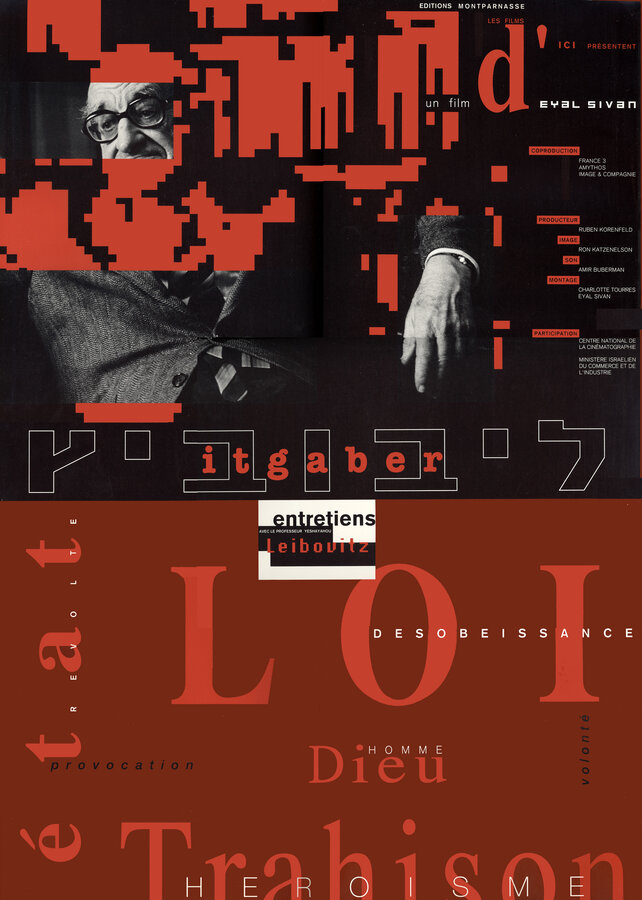
Photo gallery
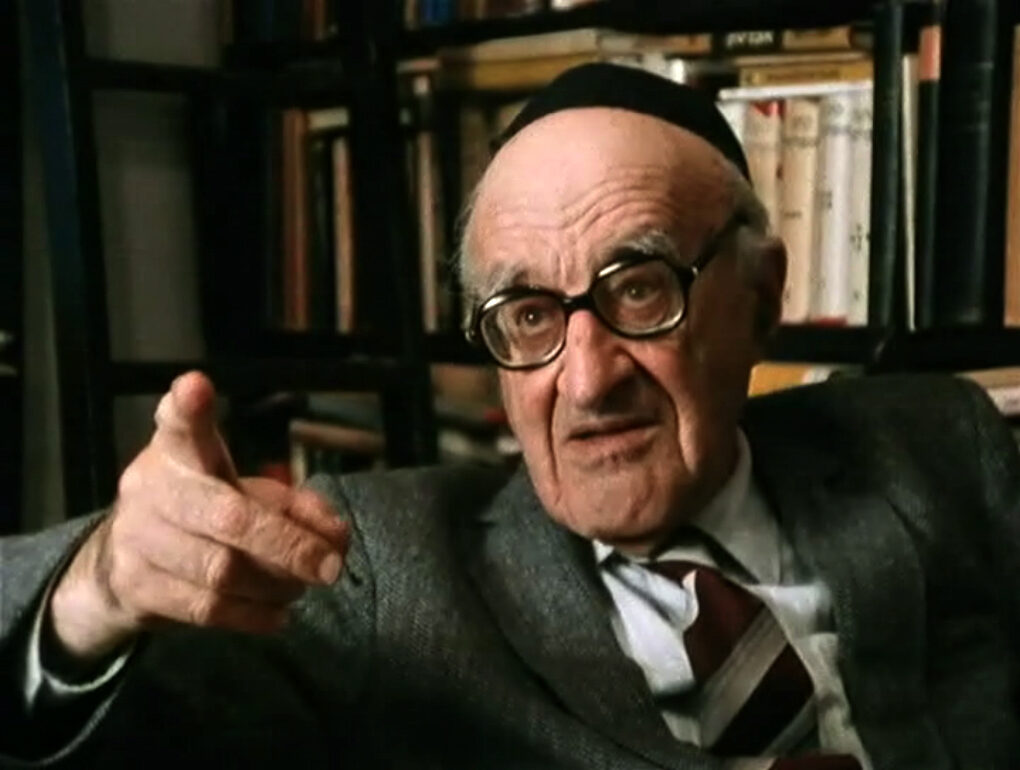
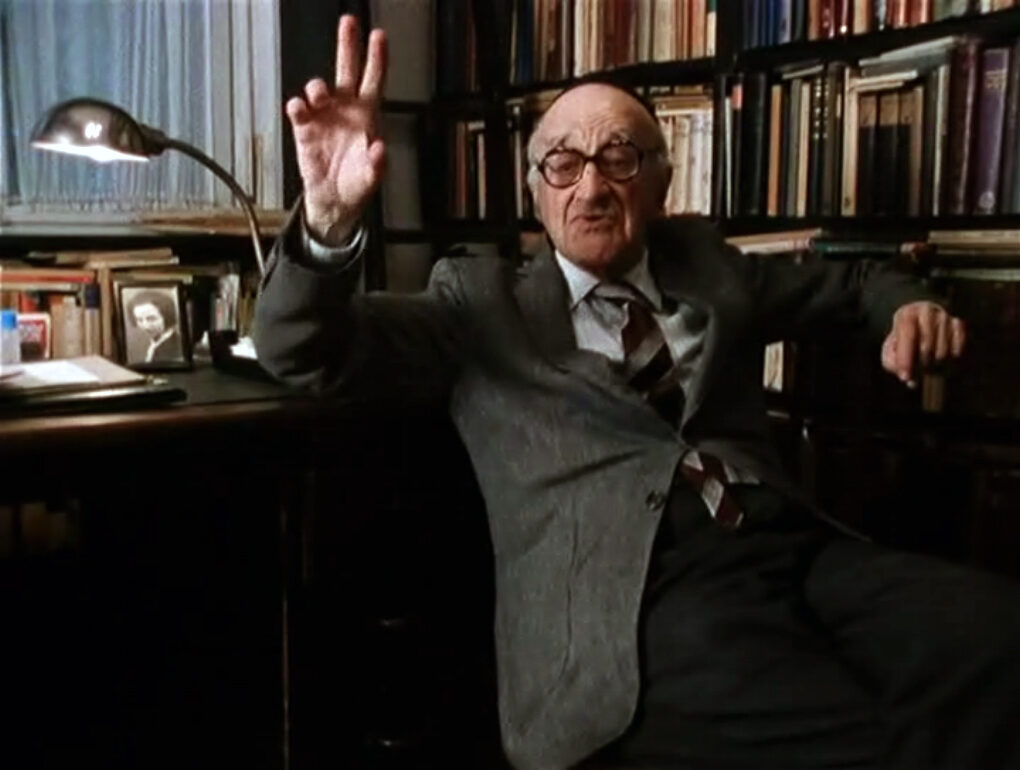
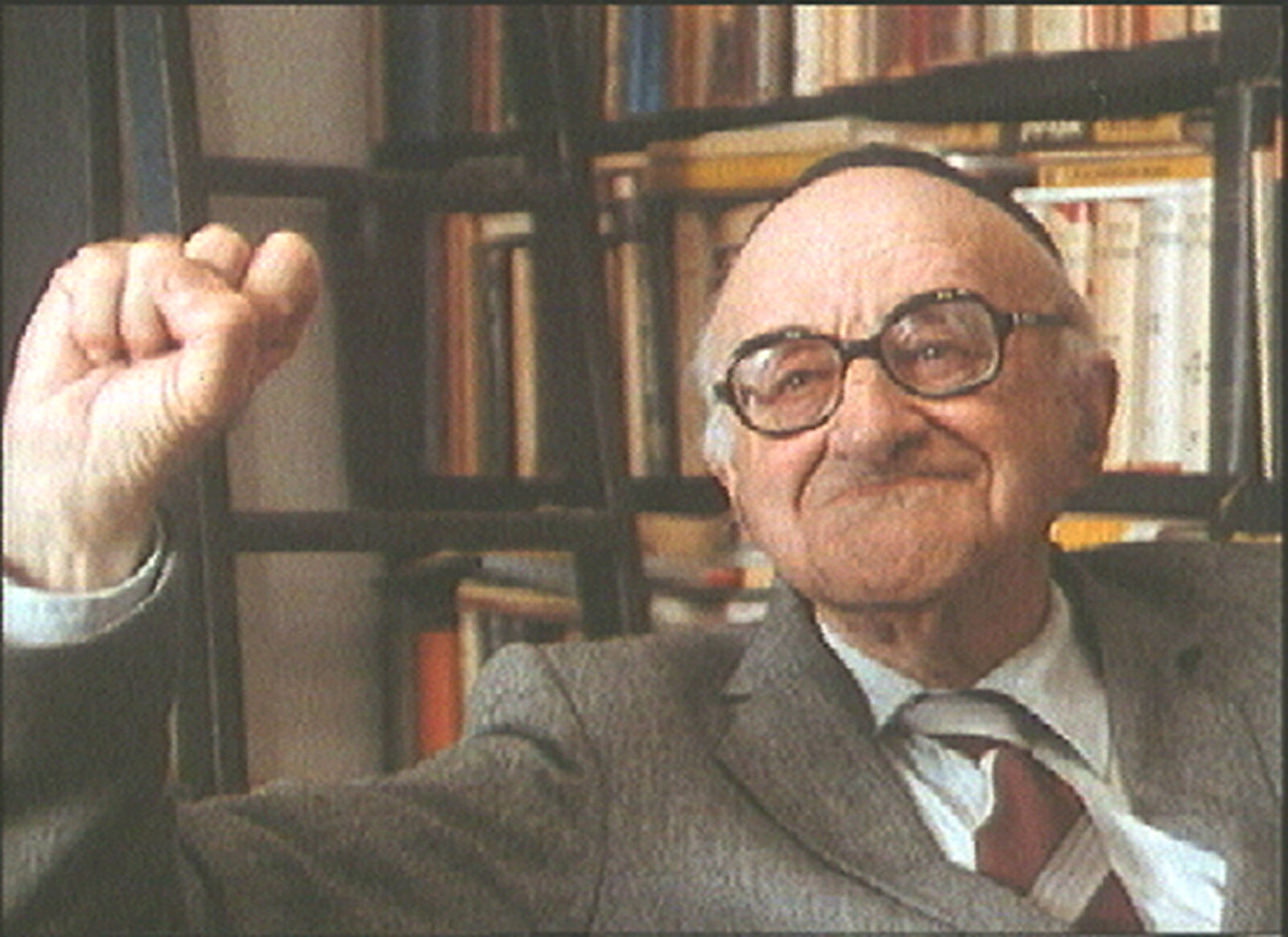
Credits
Author: Eyal Sivan
Director of Photography: Rony Katzenelson
Sound Engineer: Amir Buverman
Editors: Eyal Sivan & Charlotte Tourres
Producer: Ruben Korenfeld
Press (excerpts)
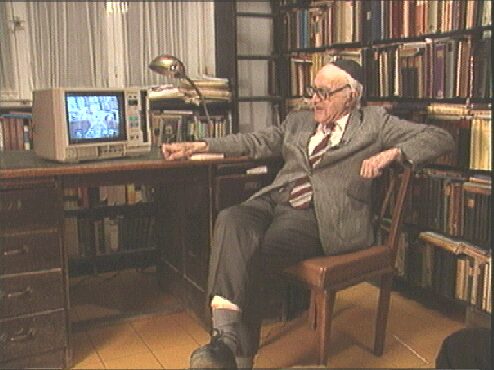
“This film preserves an oratory art made of imprecations, ruptures, silence and repetition, characteristic of the subtle and grandiloquent prophets the Jewish people has always counted among its own (…) The televisual dimension is never lost: through the VCR, Leibovitz is brought face to face with his own earlier recordings. This device tries to shake up a system of thought while tracking it through its own intricacies. Not fooled, but fascinated, this document is both maddening and delightful.” — Télérama
“Original, because the director managed to maintain, despite his interlocutor's strong personality, a fair distance that never robs the viewer of their freedom of perception. In front of Eyal Sivan's camera, Leibowitz plays several roles: the scientist-philosopher delivers the well-argued fruit of his reflections and knowledge, the citizen grows impassioned against the established order, the interviewee turns questions back on the interviewer and comments on them. The whole is a delight to watch and listen to.” — Différences
“Whether one claims allegiance to Leibowitz's thought or harbours a fierce hatred of it, this film educates and shakes you up. Rare qualities in these times.” — Journal des lettres et de l'audiovisuel
About the film
Yeshayahu Leibovitz was born in Riga, Latvia, in 1903. He grew up in a wealthy, Orthodox and Zionist Jewish family. Educated from a very young age by private tutors, he spoke Hebrew, Yiddish, German, Russian and French fluently. A childhood such as one can hardly imagine today, steeped in an open, deep and refined culture.
In 1919 — he was then 16 — a civil war pitted the Reds against the Whites in Russia. Like many of his contemporaries, he emigrated to the very young Weimar Republic, ablaze with its intellectual and artistic ferment.
He enrolled at the University of Berlin, where he studied biochemistry and medicine. No fewer than five of his professors were Nobel laureates. There he also met his future wife, Greta, a mathematics student.
In 1928, he fulfilled his dream: leaving for Palestine. But he stayed only briefly and returned to study medicine in Berlin, studies he went to finish in Switzerland once the Nazis came to power. He never, he specified, suffered antisemitic discrimination, neither at the university nor in the street.
It was in 1934 that he settled permanently in Palestine with his wife Greta. He immediately began teaching neurophysiological medicine and headed the biochemistry department at the prestigious Hebrew University of Jerusalem.
In 1948, he took up arms to take part in the creation of the State of Israel, which for him would be "the framework of the Jewish people's national independence." Already, he demanded the separation of religion and State, to preserve religious values from the grip of politics. A deeply religious man, he supported secular people exasperated by religious orthodoxy.
As early as the day after the 1967 war, he made his accusation: the occupation of the territories was nothing other than the setting up of a system of oppression of one people over another. Was the people of Israel on the dangerous slope that would lead them to become "Judeo-Nazis"?
A dark and pessimistic prophet of doom, he belonged to no political current: "There is no such thing as the moral progress of man, and History is nothing but the tale of the crimes, follies and catastrophes of the human race." And, he added, "if this terrible world is unbearable to you, kill yourself…"
Because life has meaning only in individual action: "The noblest thing in History is man's struggle against these crimes, follies and catastrophes. A constant, eternal struggle, without victory."
In the 1970s, he was offered a chair of philosophy at the Hebrew University.
People came to listen to him, asked to see him: "Hundreds of people, from every side, come to see me, write to me or call me. I realize to what extent I have become the 'mouth' of those mute people who don't know how, don't manage, or don't dare to put their thoughts and feelings into words. They are very glad that it is I who help them define these thoughts and feelings. I know this, but I don't think anyone has changed their opinions because of it."
Yeshayahu Leibovitz received in his home, a modest Jerusalem apartment, at any hour of the day or night, whoever wished to see him: a disoriented soldier wrestling with a crisis of conscience, a doubting religious man, a man struggling with drugs… He also received intellectuals of every background and nationality.
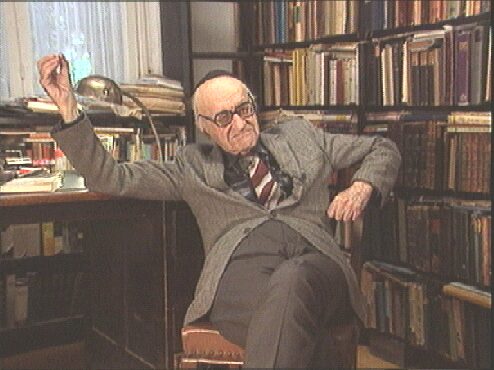
His speech is clear. He is a powerful orator.
He never stopped giving seminars, lectures, taking part in debates. He never stopped denouncing. Anger was his strength.
At the time of the Lebanon War, in 1982, during a lecture, alone on stage, he said: "I ask every honest person to stand up and declare loudly, with me, that they are a traitor. That they are betraying the values held sacred by this country today. I call for an uprising, for revolt."
Yeshayahu Leibovitz was never alone. His wife, Greta, watched over him from the shadows. She accompanied him on all his travels, knew every one of his speeches by heart, corrected his mistakes.
"The most important thing in a man's life is his wife," he said.
In 1993, he was proposed for the Israel Prize, an eminent honour, which sparked a general outcry. Yeshayahu Leibovitz refused the prize.
He died in August 1994.
For 15 years, Prof. Leibovitz directed the editing and development of the Hebrew Encyclopedia, to which he contributed several articles himself. Beyond his numerous scientific works, he published various collections of articles, discussions, reflections and public addresses. Among his books: • Faith, History and Values • The Faith of Maimonides • Conversations on Science and Values • Evolution and Genetics • Body and Soul: The Psychophysical Problem • Judaism, the Jewish People and the State of Israel, the only one of his works translated into French (J.C. Lattès, 1985)