Photo gallery
Credits
A film by: Rony Brauman & Eyal Sivan
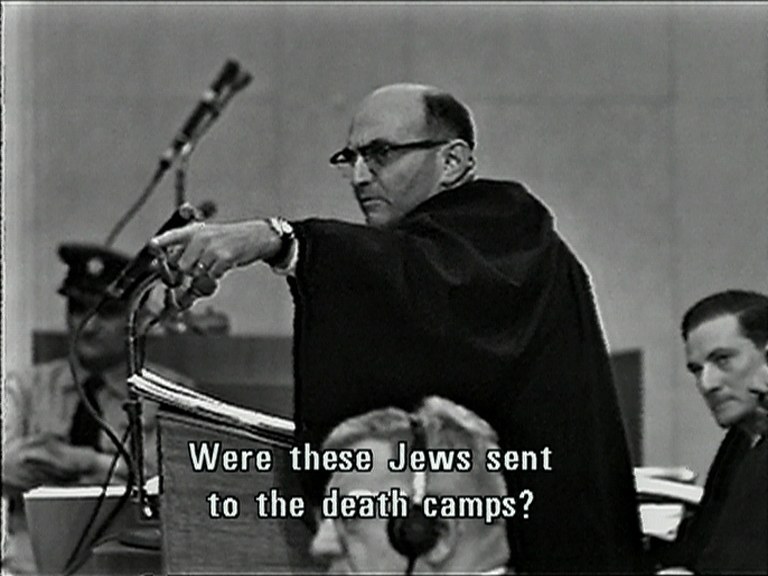
With: Adolf Eichmann (defendant), Robert Servatius (defence counsel), Gideon Hausner (attorney general), Gabriel Bach & Ya'akov Bar Or (prosecutors), Moshe Landau (presiding judge), Benjamin Halevi & Yitzhak Raveh (judges)
Inspired by: Eichmann in Jerusalem: A Report on the Banality of Evil by Hannah Arendt (Viking Penguin USA Inc., 1963)
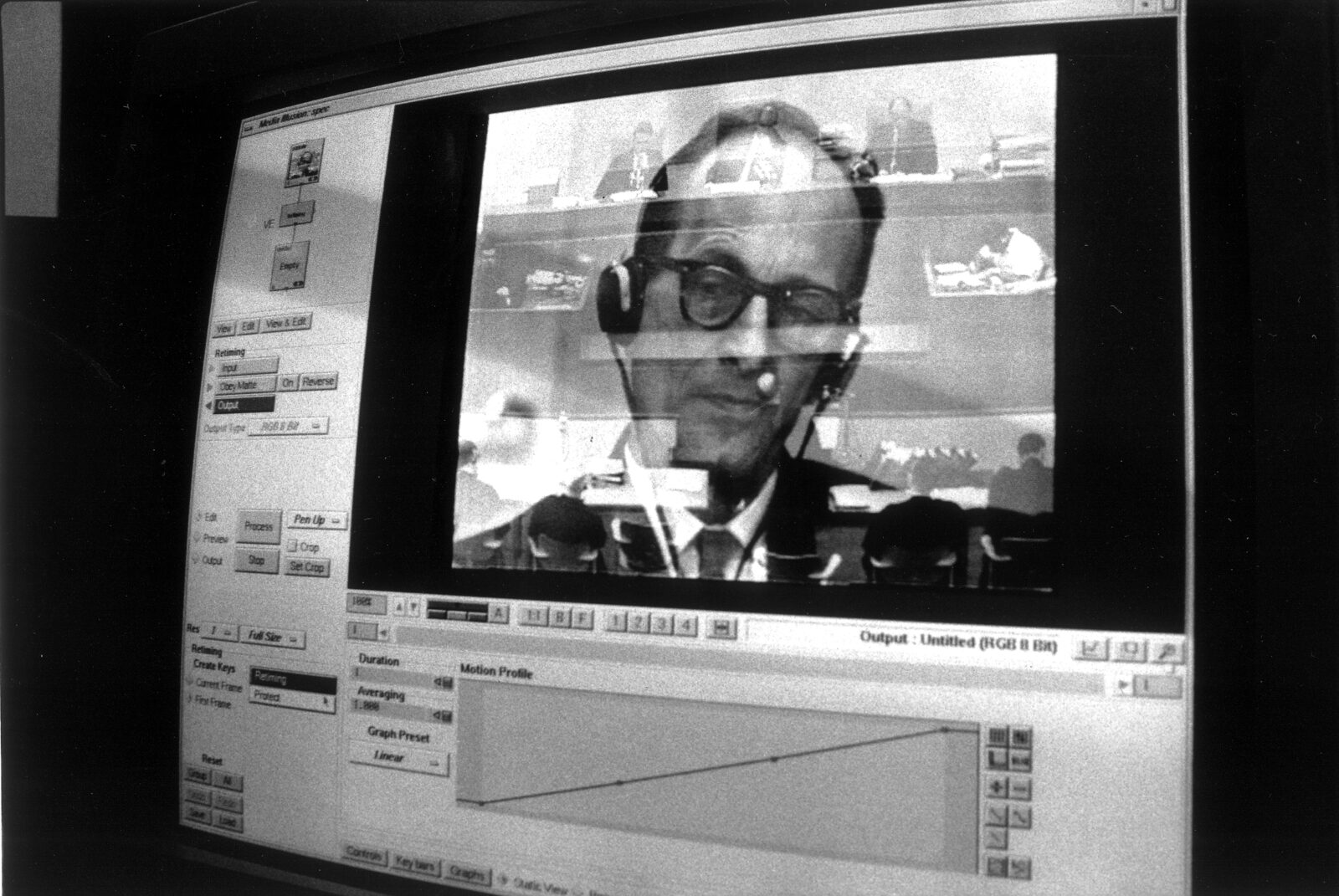
Directed and produced by: Eyal Sivan, from footage recorded in 1961 in Jerusalem during the trial of Adolf Eichmann, by Leo Hurwitz
Executive producer: Armelle Laborie
Picture editing: Audrey Maurion
Sound editing: Nicolas Becker, Audrey Maurion
Sound design: Nicolas Becker
Mixing: Philippe Baudhuin, Thomas Gauder
Original music: Nicolas Becker, Jean-Michel Levy, Krishna Levy, Yves Robert, Béatrice Thiriet
Production manager: Yves Smadja
Associate producers: Martine Barbé, Amit Breuer, Erich Lackner, Elke Peters
A coproduction of: Momento! (France), Bremer Institut Film/Fernsehen (Germany), Image Création (Belgium), Amythos Film & TV Productions (Israel), Lotus Film (Austria), France 2 Cinéma, Westdeutscher Rundfunk, RTBF Belgian Television
Awards and selections
Awards
• Adolf Grimme Award, Germany, 2001
Festival selections
• Berlin International Film Festival – Official Selection, 1999
• DocAviv, Tel Aviv, Israel, 1999
• Internationales Dokumentarfilm Festival, Munich, 1999
• Rio de Janeiro International Film Festival, 1999
• Toronto International Film Festival, 1999
• Mostra Internacional de Cinema, São Paulo, 1999
• Sheffield International Documentary Festival, 1999
• Semana Internacional de Cine de Valladolid, 1999
• Duisburger Filmwoche, Germany, 1999
• Tübingen French Film Festival, Germany, 1999
• Australian International Documentary Conference, 1999
• Festival France Cinema Firenze, Italy, 1999
• Margaret Mead Film Festival, New York USA, 1999
• Festival of Jewish Cinema, Melbourne-Sydney-Perth, Australia, 1999
• Mumbai Festival of Films, India, 1999
• International Meeting Cinema & History, Istanbul, Turkey, 1999
• Cinemateket Svenska Filminstitutet, Stockholm, Sweden, 2000
• Human Rights Watch Film Festival, London, UK, 2000
• Diagonale 2000, Graz, Austria, 2000
• Hong Kong International Film Festival, 2000
• Buenos Aires Festival Internacional de Cine Independiente, Argentina, 2000
• Input 2000, Halifax, Canada, 2000
Press (excerpts)
“For all the questions it raises, The Specialist is an essential film, a work that dusts off consciences.” — Historia
“Eyal Sivan sketches, in negative, a masterful reflection on the ability to disobey as an essential component of our humanity.” — Charlie Hebdo
“The Specialist is an exemplary reflection on the banality of absolute evil.” — Le Nouvel Observateur
“Gripping, terrifying.” — Télérama
“The Specialist is a philosophical essay that clearly shows cinema can also be a tool of thought, not merely a vehicle for emotion. More than a duty of memory, it is a duty of thought that Rony Brauman and Eyal Sivan call us to, wanting to move past the emotional opposition of executioner/victim to lead us to consider what Hannah Arendt called "the banality of evil." (…) They call for the full exercise of intelligence to reveal the deep structures within the human mind and within modern societies.” — Le Figaro
“One must see The Specialist by Rony Brauman and Eyal Sivan. See it, and discuss it.” — L'Histoire
“A (philosophical) film belonging to that family of films without a family, which invent a new form of thinking about History at one of its key moments.” — Positif
“Let us not hesitate to say it: The Specialist may be the most important film ever made about the Hitlerian "machinery."” — L'Autre Rive
About the film
He believes that his role as an executor — purely administrative and logistical, devoid of all passion — puts him beyond the reach of human justice, even though it does not exonerate him of all responsibility.
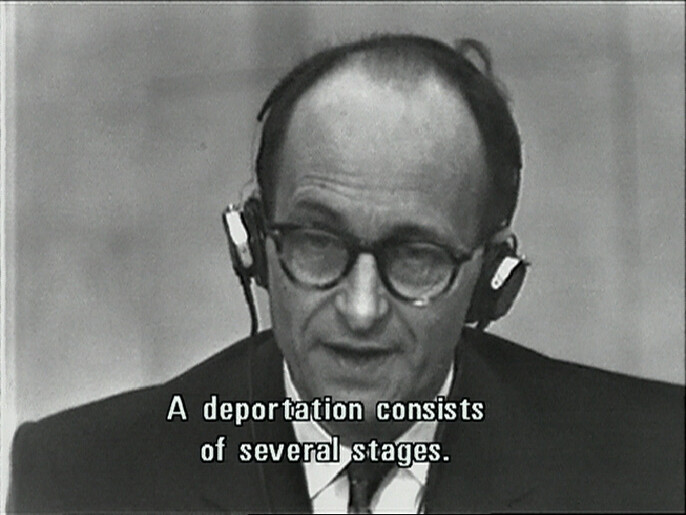
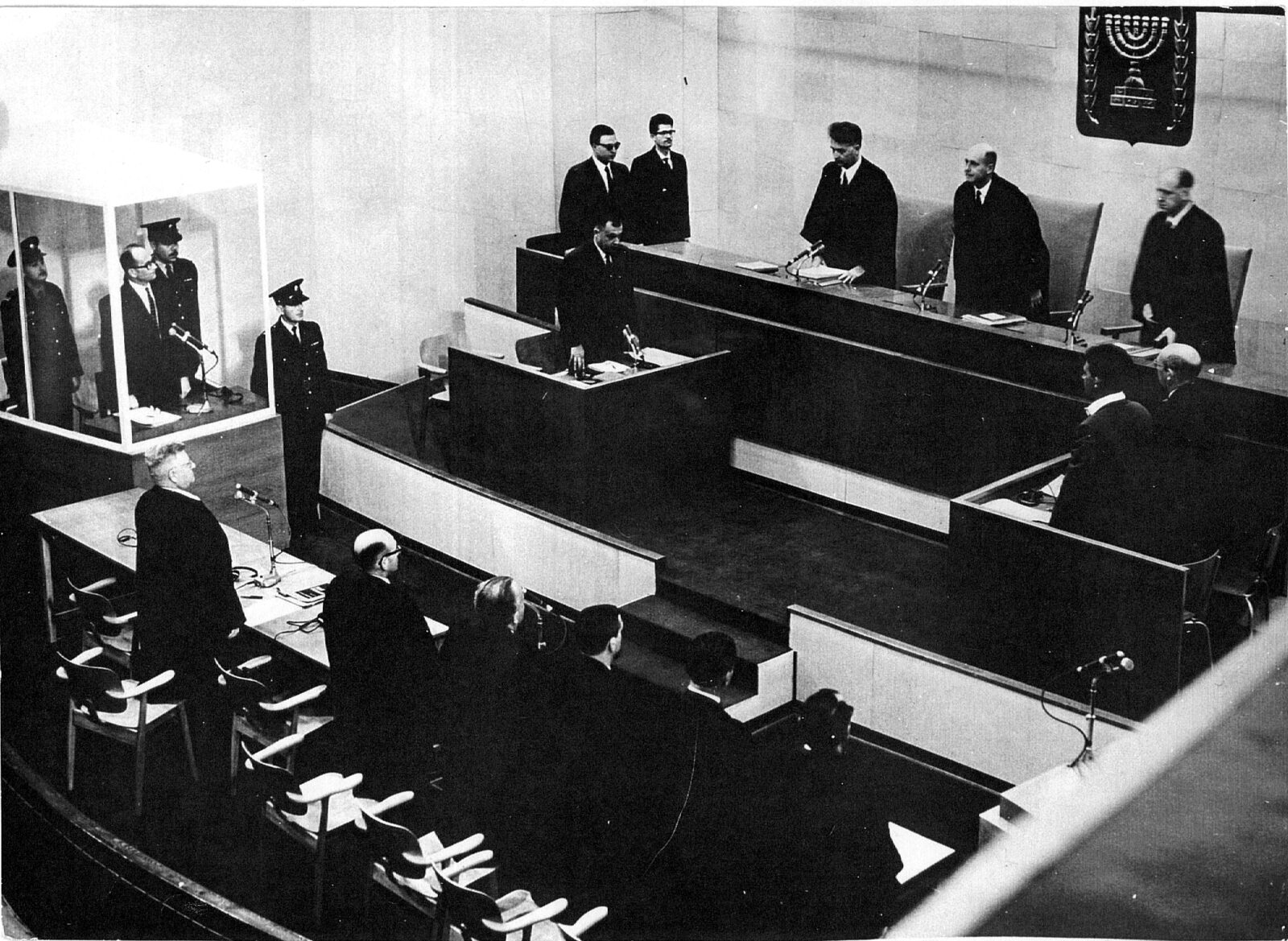
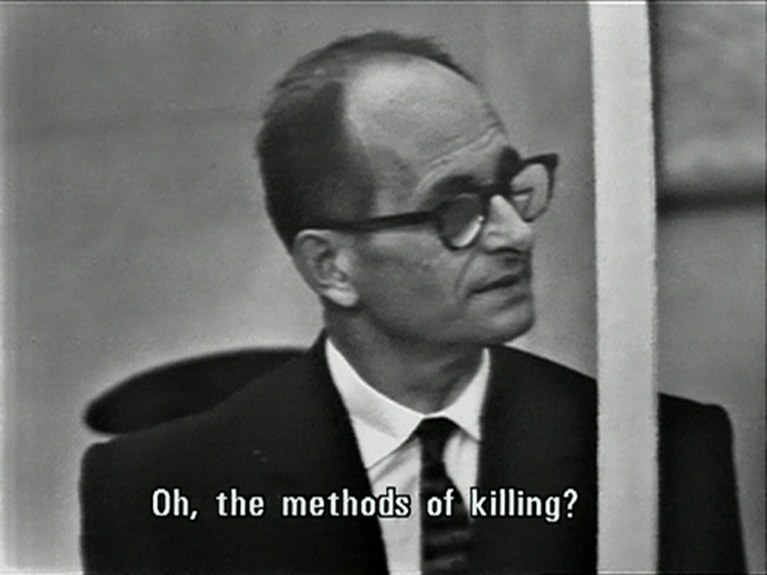
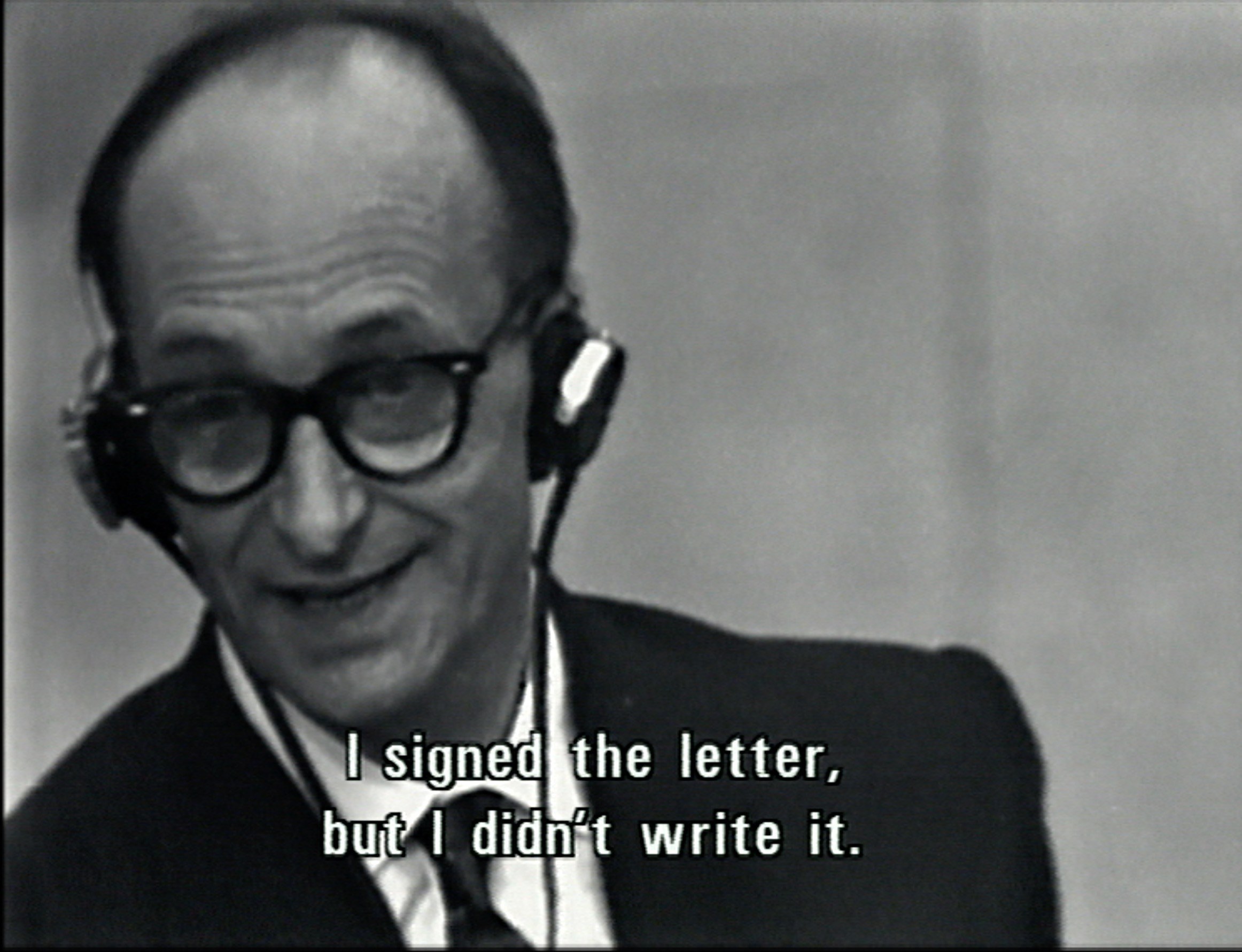
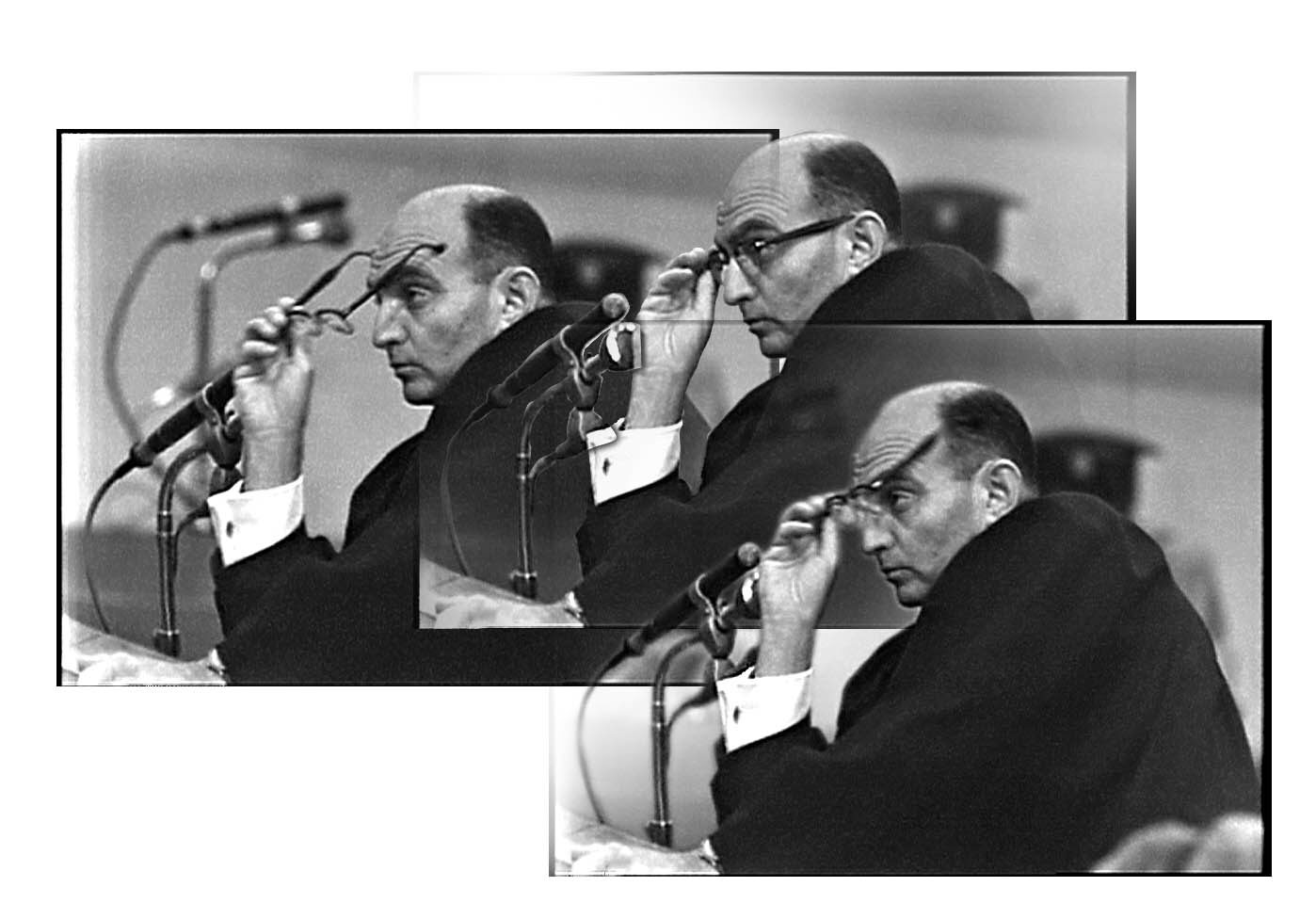
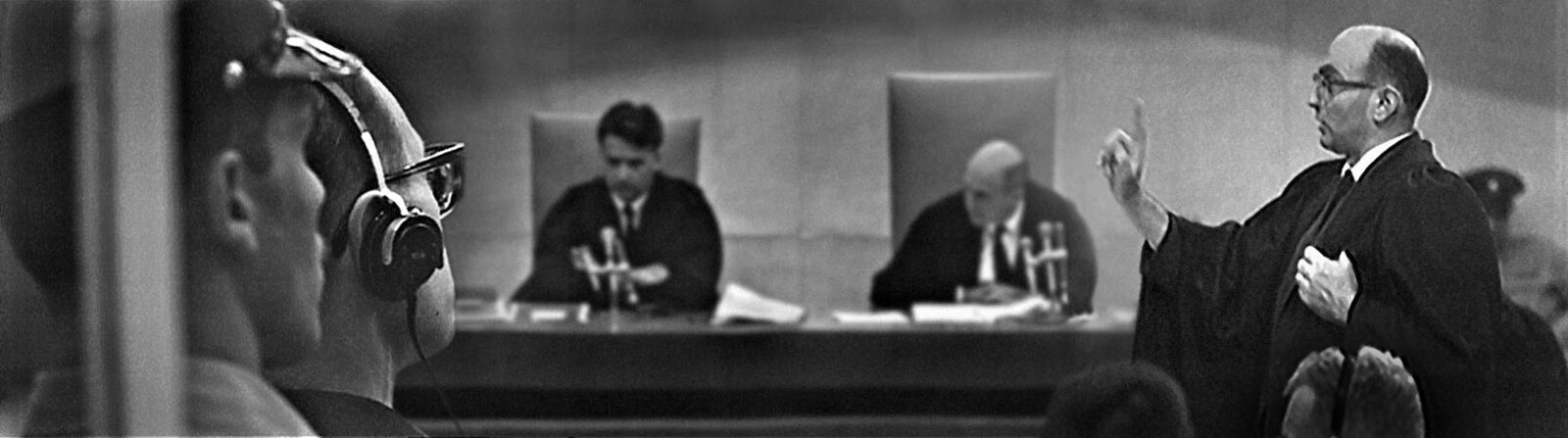
The defendant, Adolf Eichmann, is a man of average height, in his fifties, nearsighted, nearly bald, and afflicted with nervous tics. Throughout his trial, he sits in a glass booth, surrounded by carefully stacked documents which he annotates, rereads and leafs through tirelessly. An expert in emigration, a specialist in the "Jewish question," responsible for transporting "racial deportees" to the Nazi camps between 1941 and 1945, he describes his work with a stifling bureaucratic precision. Facing the court and the survivors of hell who take turns at the witness stand, he acknowledges having supplied the death factories with the human quota to be destroyed. He labours to expose the conflict between his professional duty and his human conscience, and insists that no one can reproach him for having done his job badly.
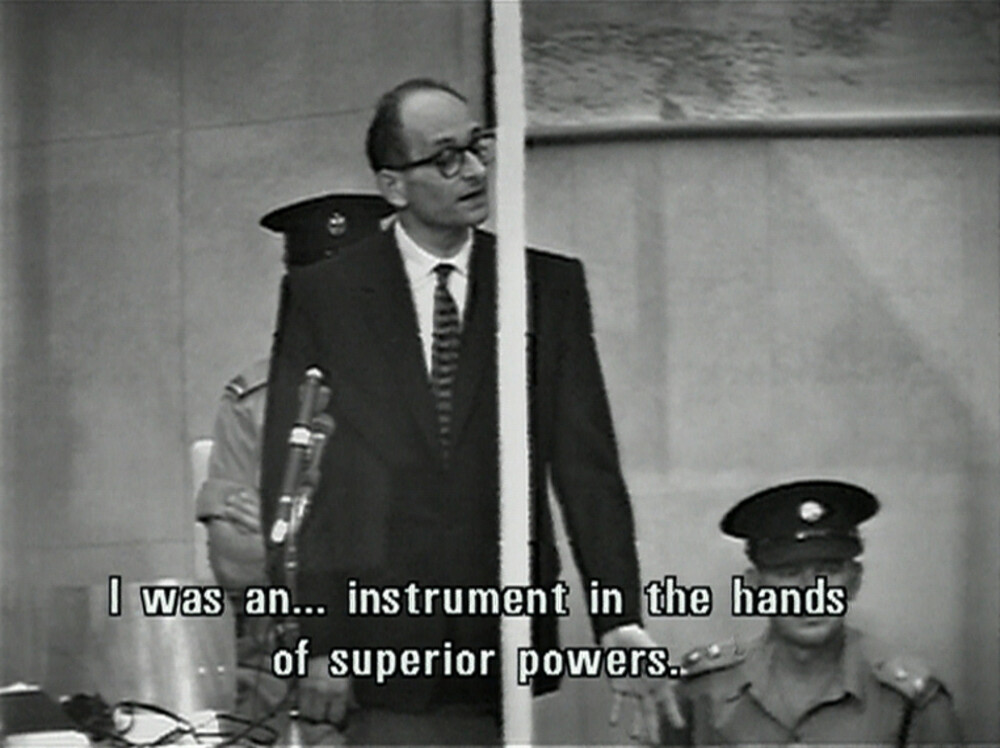
Intoxicated by the vertigo of his own powerlessness, the accused describes himself as "a drop in the ocean, an instrument in the hands of higher forces." If he had not done it, he says, someone else would have done it in his place.
The contrast between the monstrousness of the crime and the mediocrity of the accused strikes the viewer at first glance, and even more so as the thirteen scenes that make up this feature-length documentary unfold, revealing the portrait of a man who is frighteningly ordinary.
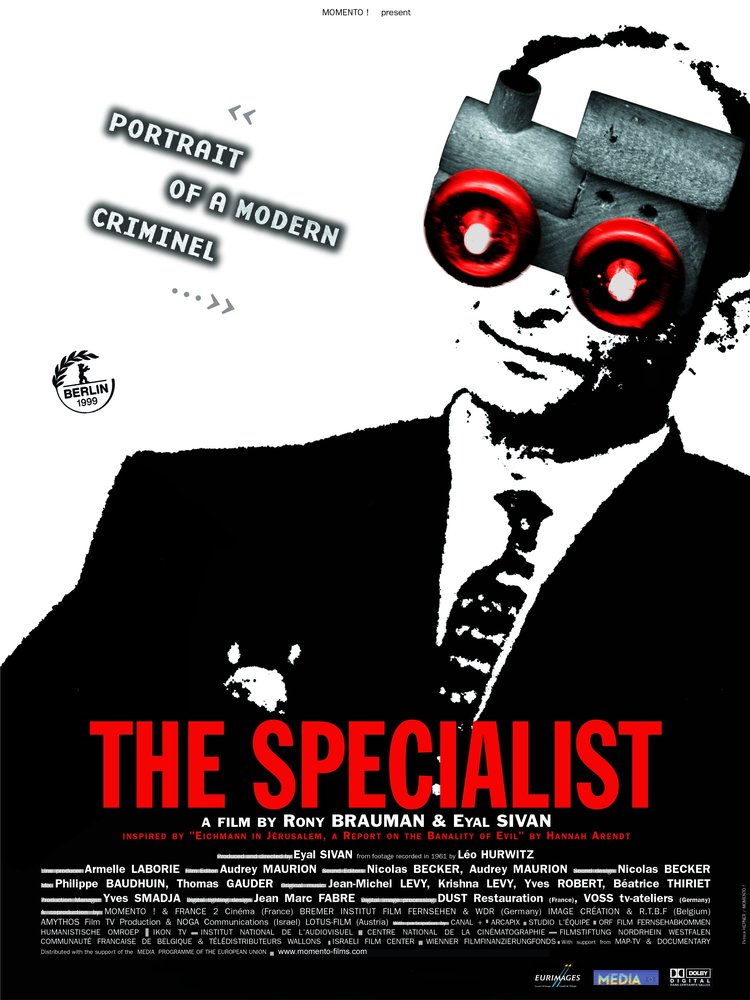
The Specialist — The extraordinary trial of a frighteningly ordinary man. Made exclusively from the 350 hours of previously unseen footage recorded during the spectacular trial of Nazi criminal Adolf Eichmann, held in Jerusalem in 1961. This film about obedience and responsibility portrays a specialist in the solution of problems — a modern criminal.