Photo gallery
Credits
A film written, directed and produced by: Eyal Sivan & Michel Khleifi
Production: Armelle Laborie
Camera: Philippe Bellaïche
Sound: Richard Verthé
Editing: Sari Ezouz, Eyal Sivan, Michel Khleifi
Sound editing: Sari Ezouz
Mixing: Stéphane Larrat
Associate producers: Omar Al-Qattan (Sindibad Films Ltd), Werner Dütsch (Westdeutscher Rundfunk Köln), Michel Khleifi (Sourat Films SPRL), Alain Bottarelli
In association with: Arte France
With the support of: Centre National de la Cinématographie
Awards and selections
Awards
• Human Rights Film Festival Award, Paris, France, 2004
• Mayor's Prize, Yamagata International Documentary Film Festival, Japan, 2005
Festival selections
• Festival du Monde Arabe, Montreal, 2003
• Festival of Arab, Iranian and South Asian Films, New York, 2003
• Festival Cinéma du Réel, Paris, 2004
• Rabat Festival, 2004
• Manifesta Festival, San Sebastián, 2004
• Carthage Festival, 2004
• Haifa Festival, 2004
• San Francisco Festival, 2004
• Washington Festival, 2004
• "Filmer à tout prix" Festival, Brussels, 2004
• Dokma Festival, Slovenia, 2004
• Singapore Festival, 2005
• Philadelphia Festival, 2005
• Jeonju International Festival, Seoul, 2005
Press (excerpts)
“Each interview lands like a bomb, so charged are the exchanged words with distress or hatred” — Le Figaro
“A film quite critical of Israel, at times damning, but revealing and gripping” — Le Monde
“A great testimony imbued with the desire to live and build together” — France Soir
“A documentary that lands like a bomb” — Télérama
“An accomplished film, a successful documentary challenge” — La Vie
“Going against received wisdom, the two filmmakers travel back through the territories to prove that "Palestinians and Israelis can do something together besides war"” — Humanité Hebdo
About the film
With Route 181, Fragments of a Journey in Palestine-Israel, Eyal Sivan and Michel Khleifi invite us on a disorienting journey through this small territory of outsized stakes.
"Route 181" follows the borders of Resolution 181, adopted by the United Nations on 29 November 1947. This resolution provided for the partition of Palestine into two states, one Jewish, the other Arab. Under its terms, 56% of the territory was allotted to the Jewish minority, while 43% went to the Arab majority, with an international zone at the centre.
Route 181, Fragments of a Journey in Palestine-Israel unfolds in three successive chapters.
Each follows a section of "Route 181":
THE SOUTH from the port city of Ashdod southward, to the borders of the Gaza Strip.
THE CENTRE from the Jewish-Arab city of Lod, to and around Jerusalem
THE NORTH from Rosh Ha'Ayin, near the separation wall, northward, to the border with Lebanon
Both filmmakers are convinced that the tragic reality of the Near East is an ideological-pathological construction fabricated by human beings, and that these same human beings are capable of deconstructing it.
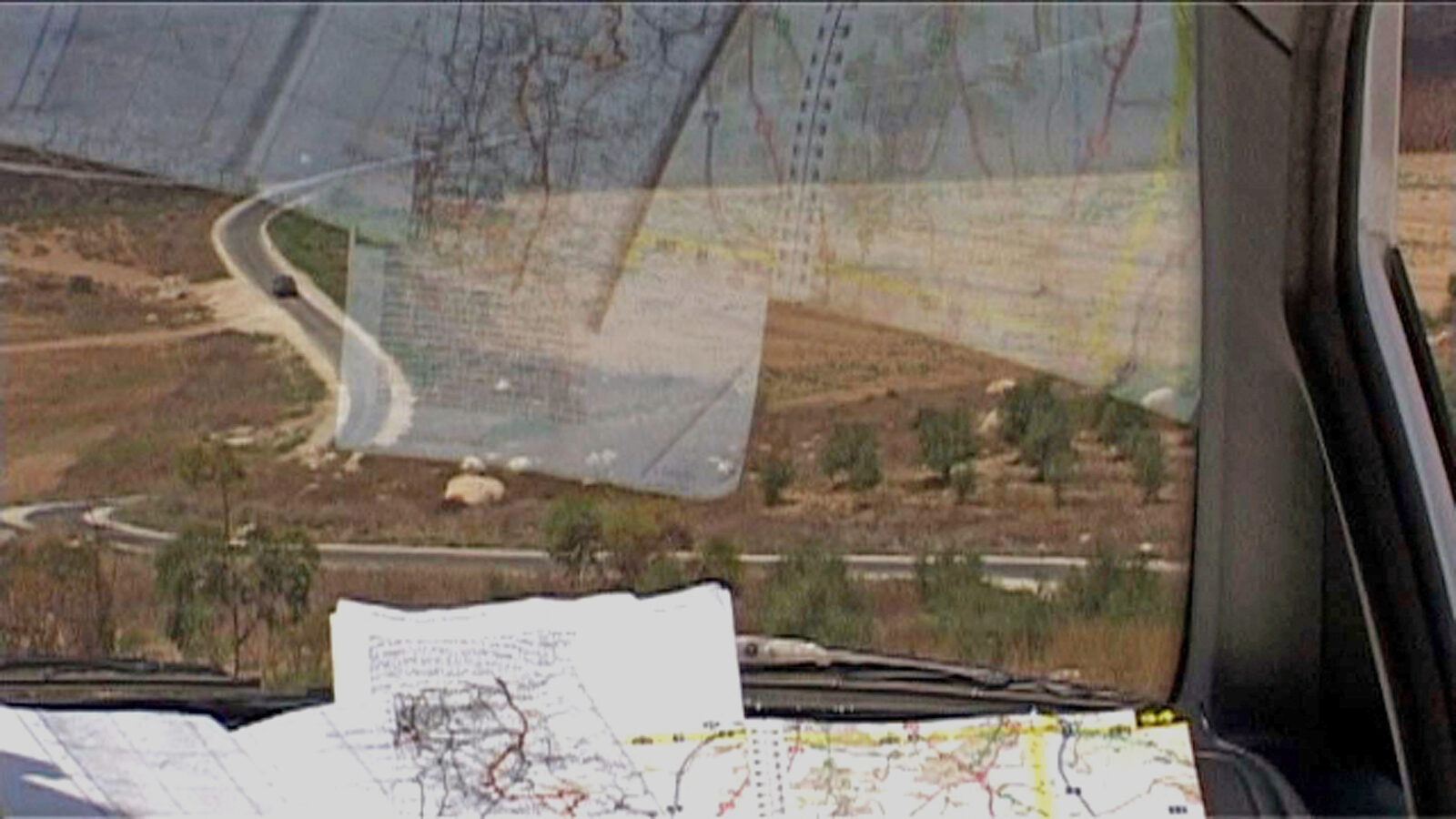
They set off unplanned, stopping wherever chance encounters took them.
They arranged no appointments. They contacted no public figures to meet, nor sought out any authorized spokespeople.
Armed only with filming permits and passes, they stopped and filmed as chance encounters arose: anonymous Israelis and Palestinians speaking about their lives, their experiences, their current situation, their particular memories, and their personal understanding of what is happening around them today. They also speak of tomorrow, of what they think their lives and this country of theirs might become.
This theoretical border, presented as a "solution," led to the first Arab-Israeli war and to a conflict whose end is still nowhere in sight.
Fifty-five years later, the two filmmakers' journey along "Route 181" follows the line of this border that never existed.
Michel Khleifi and Eyal Sivan wanted to travel their land together, to listen with each other's ears and, each through the other, draw closer to those whom fear keeps apart.
To understand. To separate what is willed from what is endured. To distinguish the dreams of individuals from political agendas. To hear said what one wished to forget.
To name oneself by listening to the other. It is in this sense that this journey in search of a possible peace and a shared life is, for everyone, an initiation.
This journey is also a lesson in humanity and tolerance. To lend an ear to the other's words. To say what is never voiced. To force oneself to look and to admit. To share memories. To name the desire to live and to build.
In their director's statement, the two filmmakers write:
"Beyond the tribal allegiances in which we do not recognize ourselves, and strengthened by our shared experience, we decided together to return to the country, to find it again, to rediscover it, and to reveal the geographical and mental reality in which the men and women of Palestine-Israel live today.
"The demarcation line of the partition plan for Palestine, drawn up and voted by the UN in 1947, is the starting point of this film's cinematic device. It sets us both a documentary challenge and a human adventure.
"Along this road that does not exist, and that we have chosen to follow beyond pre-established ideas, we wish to film the men and women, the places, the stories and the geographies — a sum of things not yet revealed. Caught up in the chance of encounters, we want to give voice to those who are forgotten by official discourse, yet who nonetheless form the foundations of both societies, those in whose name wars are fought.
"We wish to construct a cinematic act that resists the idea that the only thing Israelis and Palestinians can do together is wage war — war until the other disappears."
—
What they offer us today is not a film of two gazes, but a shared gaze born of two complementary visions, and whatever discomfort their travelogue may stir in each of us, Michel Khleifi and Eyal Sivan invite us to accompany them and follow in their footsteps.
1. TOWARD THE SOUTH: From Ashdod to Gaza
The film opens in the port city of Ashdod, where a construction site is underway. Israeli foremen, Chinese labourers and Palestinian surveyors who are Israeli citizens work side by side.
Gan Yavne is built on the ruins of the village of Barqa. A fruit-juice vendor runs a small stand. Personally, she has nothing against the return of Palestinian refugees to their native land.
A site foreman passes by.
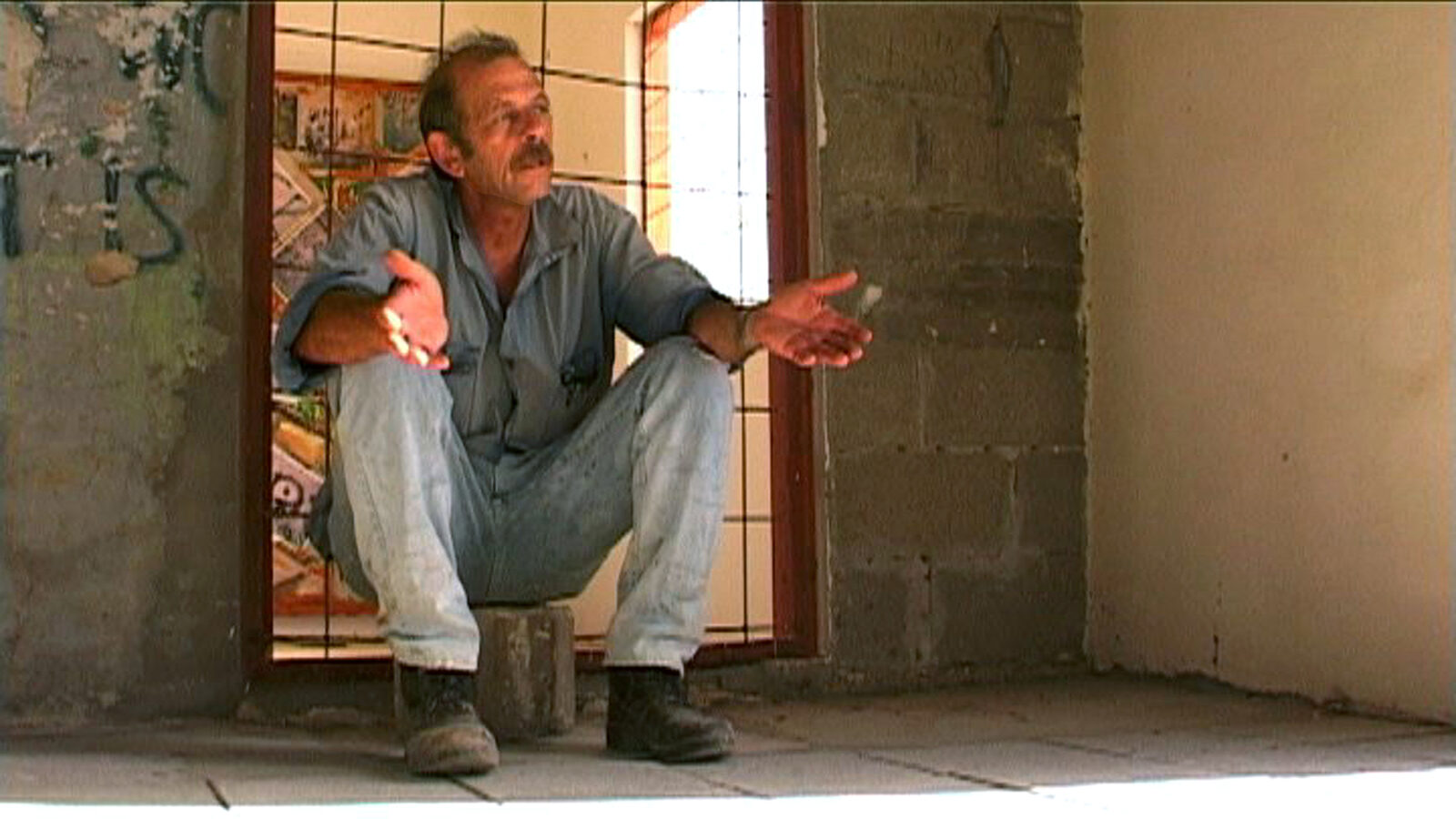
In Masmiyya, only an old woman and her son still live in what, before 1949, was the large town of Masmiyya. Their house is due to be demolished to allow for the widening of the highway.
Behind their house, a petrol station whose cafeteria, run by a Yemenite Jewish woman, is covered with military photographs.
Along the roadside, the graffiti "population transfer = peace and security" catches the eye.
In Kiryat Malachi, in his little candy shop, an Iraqi Jew recalls with nostalgia what the region was like when he settled there after arriving from Iraq. "It was an Arab region — I could have lived well with them…" he says.
In Shafir, a young high-tech engineer is building his house and talks about his neighbours, the workers from the Gaza Strip. His father tells of the founding of this village in 1949 by European survivors, on the ruins of a Palestinian village demolished a year earlier.
In the museum of Kibbutz Yad Mordechai, an old pioneer recounts the expulsion of the original Palestinian inhabitants toward the neighbouring Gaza Strip.
At Kibbutz Negba, a statue, a Stalinesque-looking monument, and a model of the kibbutz in its early days bear witness to the founding socialist dream.
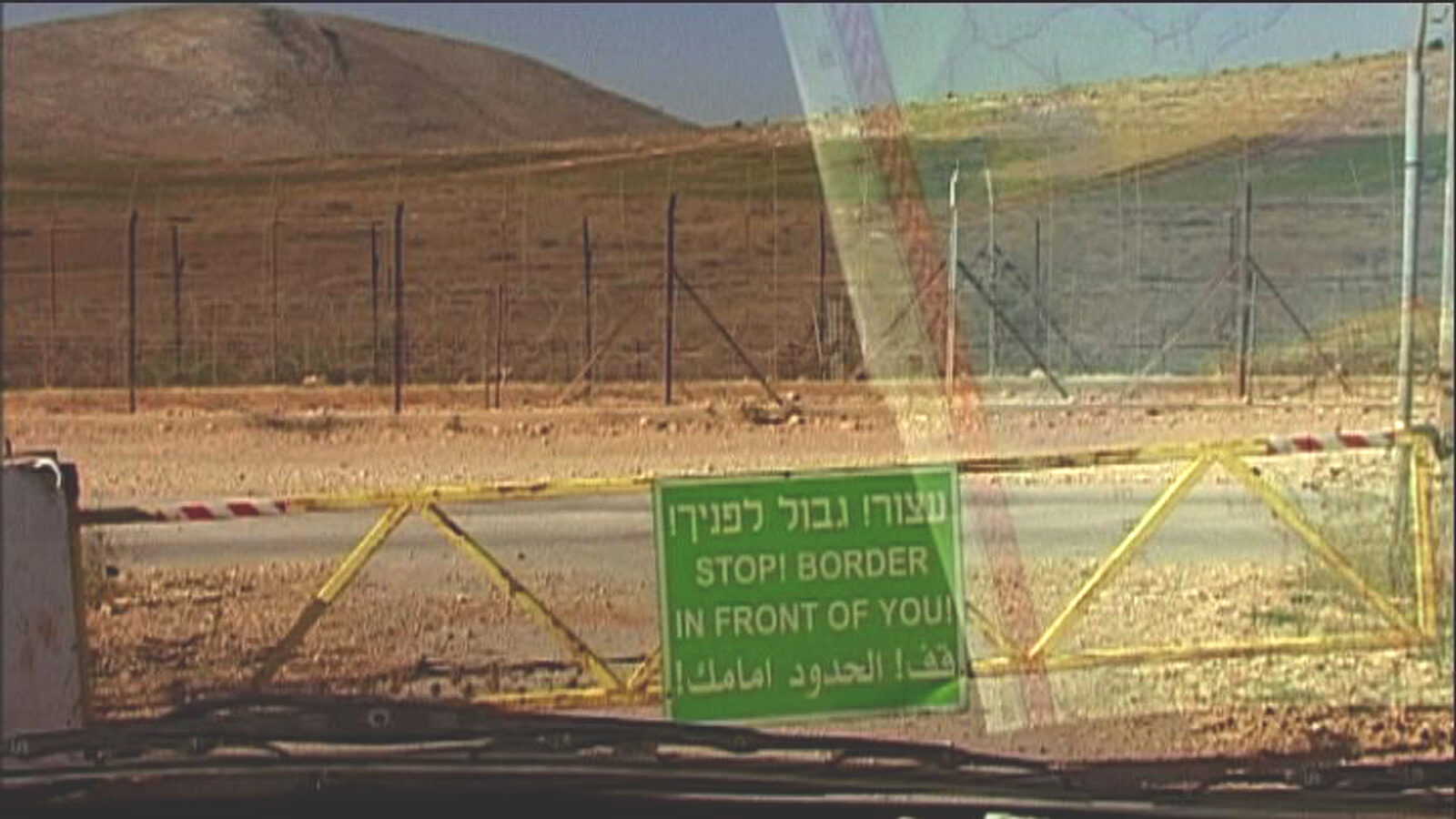
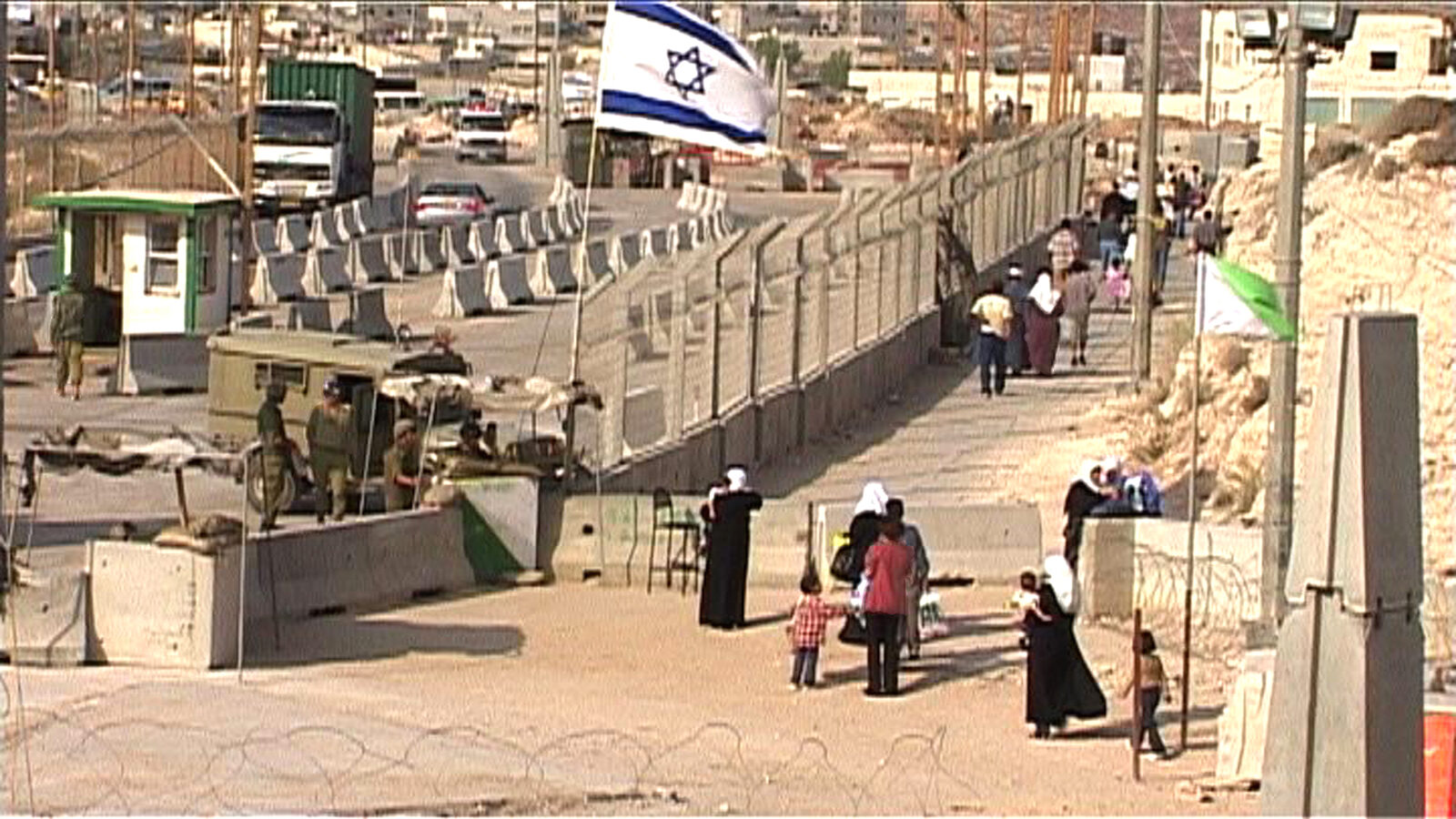
At Gaza, the Karni crossing is closed to all civilian access. Freight trucks wait in front of the sealed border. No one gets through.
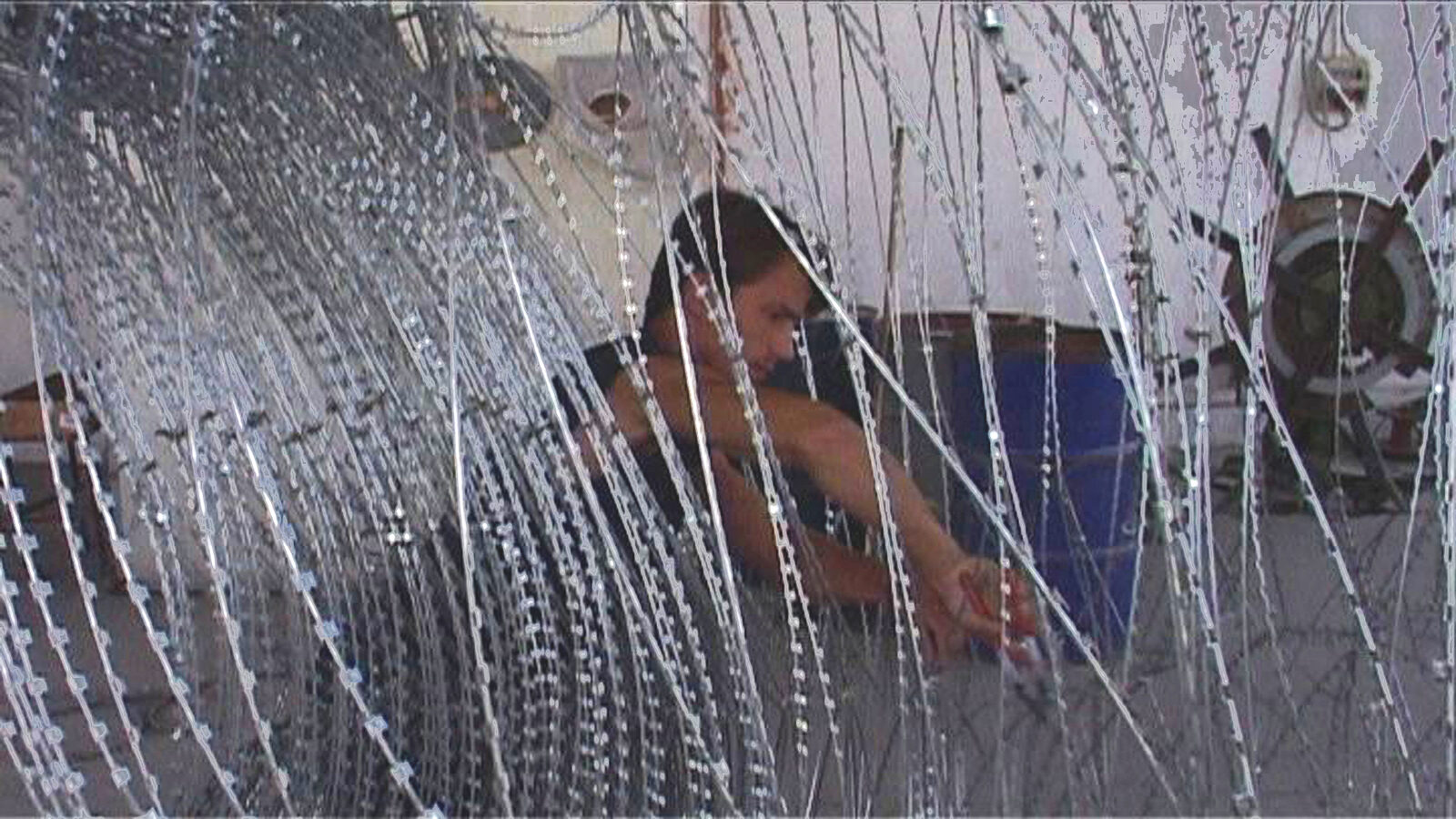
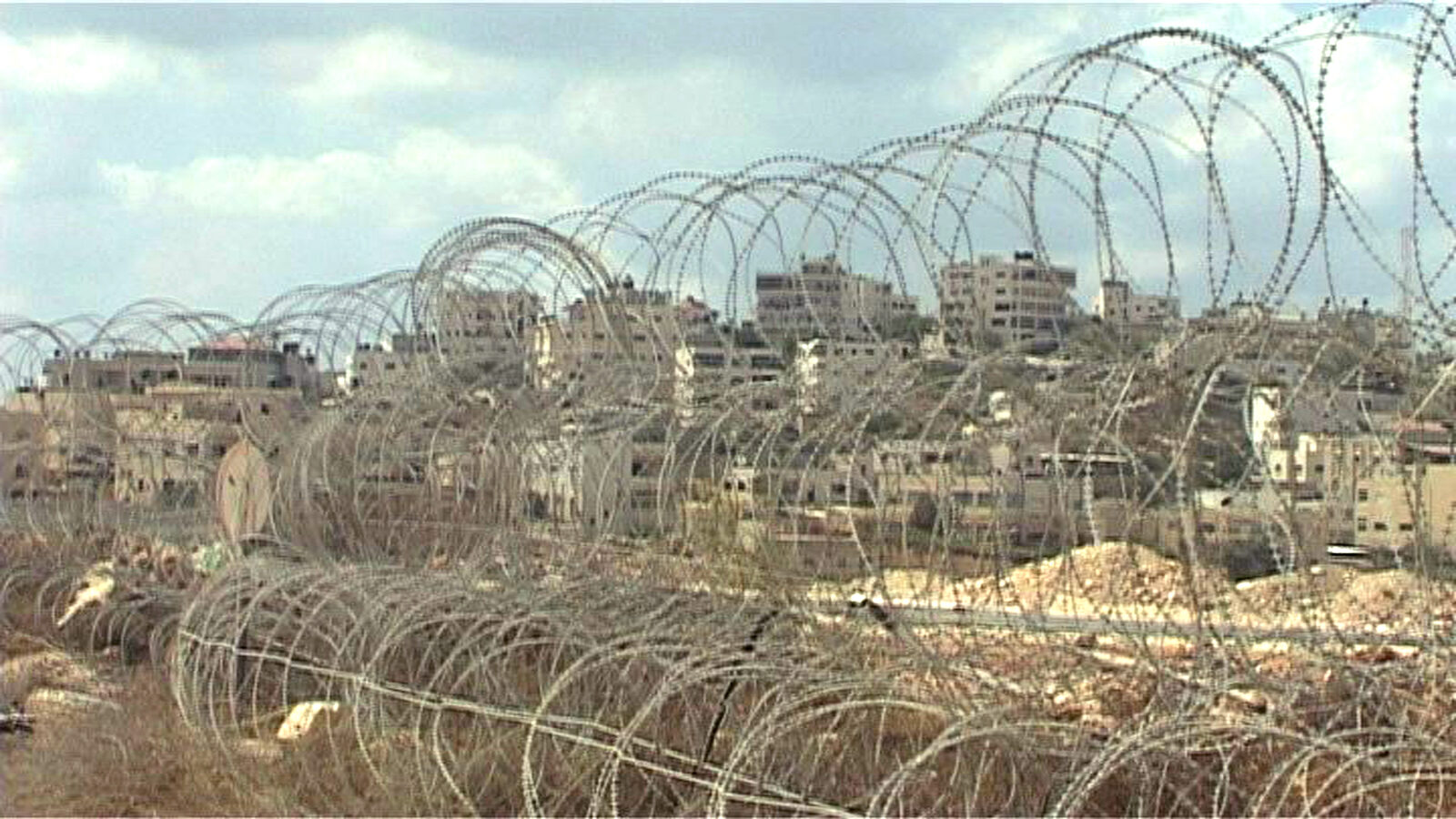
It is here that "concertina wire," the multi-layered barbed wire used to build the border between Israel and the Palestinian Territories, is manufactured.
On the border with the Gaza Strip, an Israeli family visits the Nir Am water reservoir, from which the sealed-off Gaza Strip can be seen.
The director of Kibbutz Nir Am's Water and Security Museum explains how the UN partition commission ultimately included the Negev in the Jewish territories. He dreams of tourism development facing Beit Hanoun.
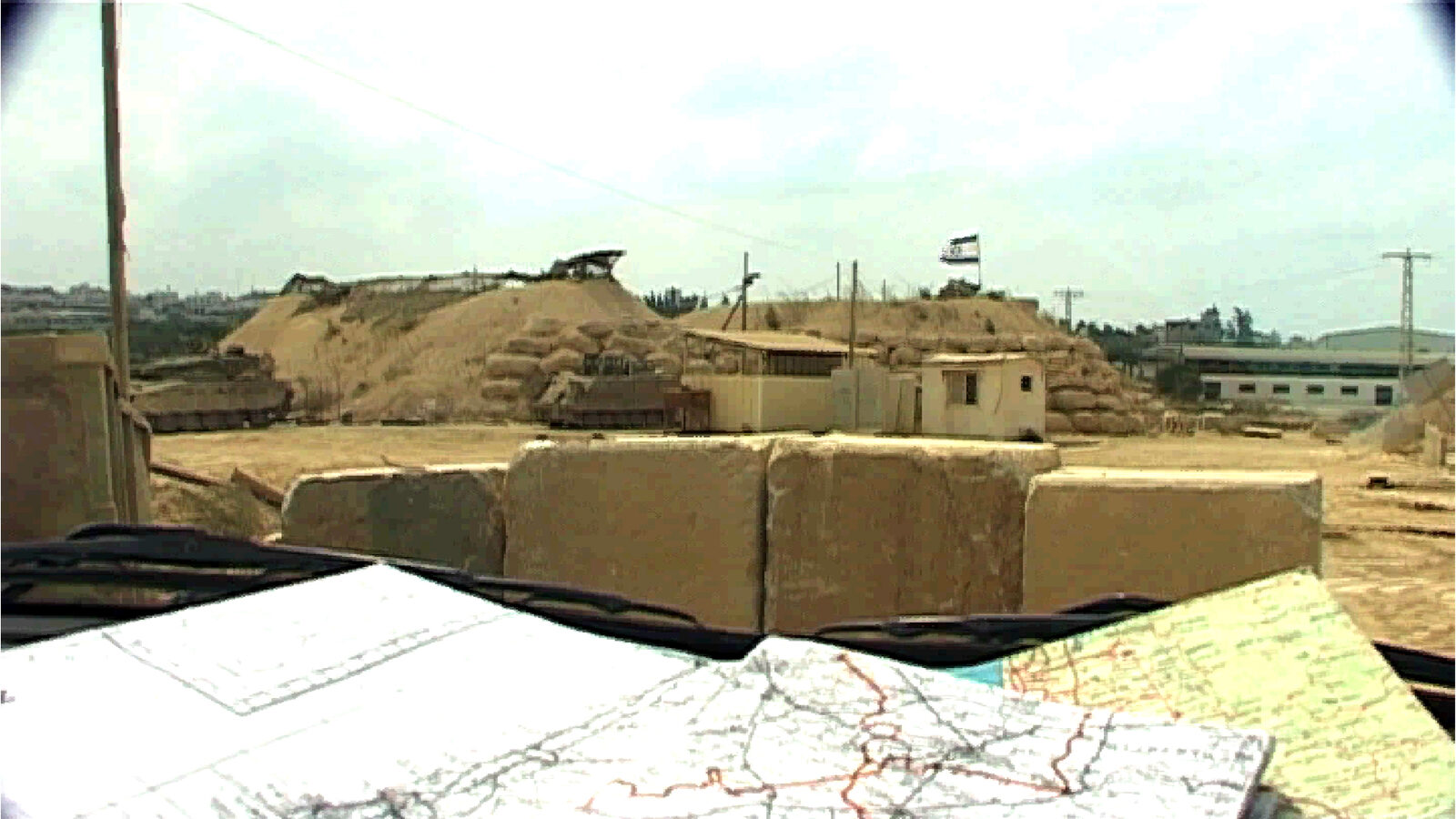
At the Israeli military base, only the electric fence surrounding the Gaza Strip can be filmed.
A white house in the middle of nowhere, near the electric fence of the Gaza Strip, in a lunar landscape. A member of Kibbutz Nir Oz would like to turn this building into an art gallery.
Night falls over the deserted Erez border crossing.
Tonight, the Herzl House has been rented out to celebrate a large wedding.
2. THE CENTRE: From Lod, to and Around Jerusalem
Arrival at the Lod reception centre for new immigrants from Ethiopia. Hebrew prayers and Russian music.
In Lod, members of the Jewish-Arab movement Ta'ayush ("Living Together") demonstrate against house demolitions. A municipal council session debates the issue.
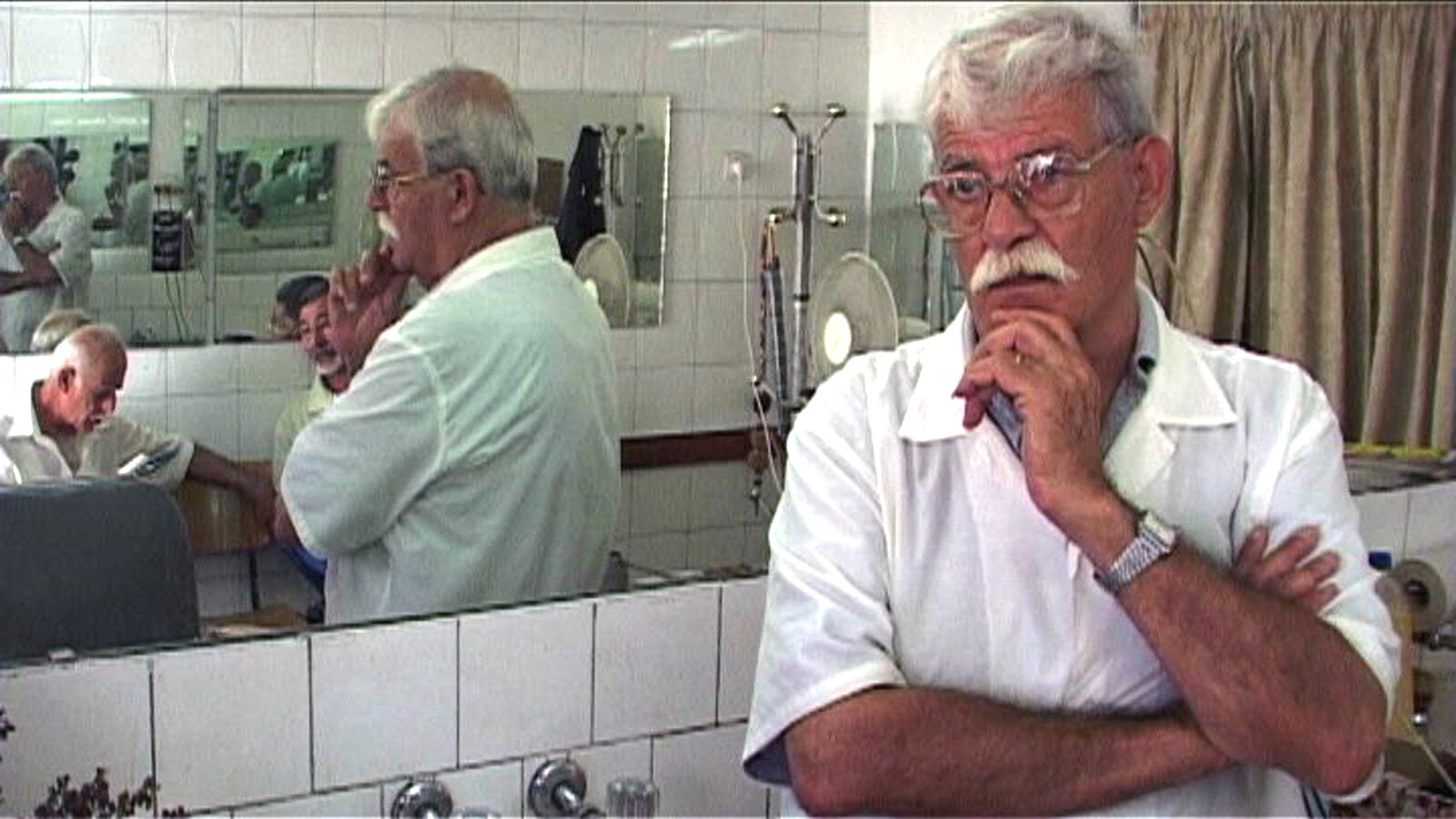
In the "ghetto" neighbourhood, a former Arab political prisoner and her Jewish neighbour. In his salon, the old barber recounts the end of the great Arab city of Lydda (Lod, before 1948).
On the road to Kibbutz Gezer, a Jew of Russian origin. Further on, a Bedouin dreams of joining the Israeli army.
At Kibbutz Gezer, American Protestants from Kansas plant olive trees as a sign of peace and solidarity. The ceremony is led by a woman rabbi and her husband, both American Jews.
On the road to Jerusalem, the ruins of Palestinian villages.
In Kfar Bin Nun, a sculptor, the son of Nazi-era survivors, recounts his mother's ordeal. He wants to build a paradise for his children.
In Hulda, a Jewish National Fund guide welcomes visitors to the T. Herzl House. Kibbutz Hulda is built on the ruins of a Palestinian village.
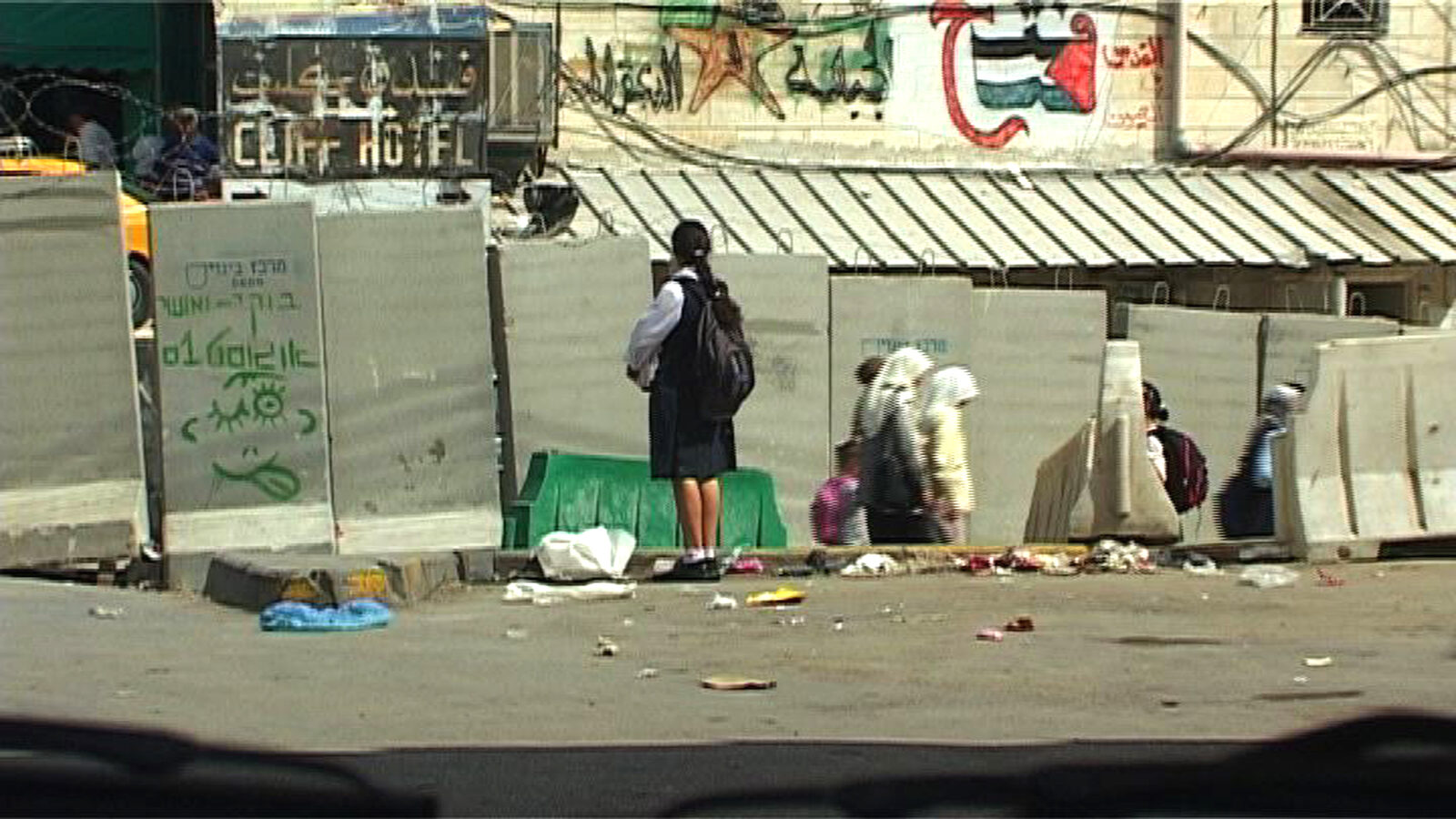
Military checkpoints multiply as Jerusalem approaches.
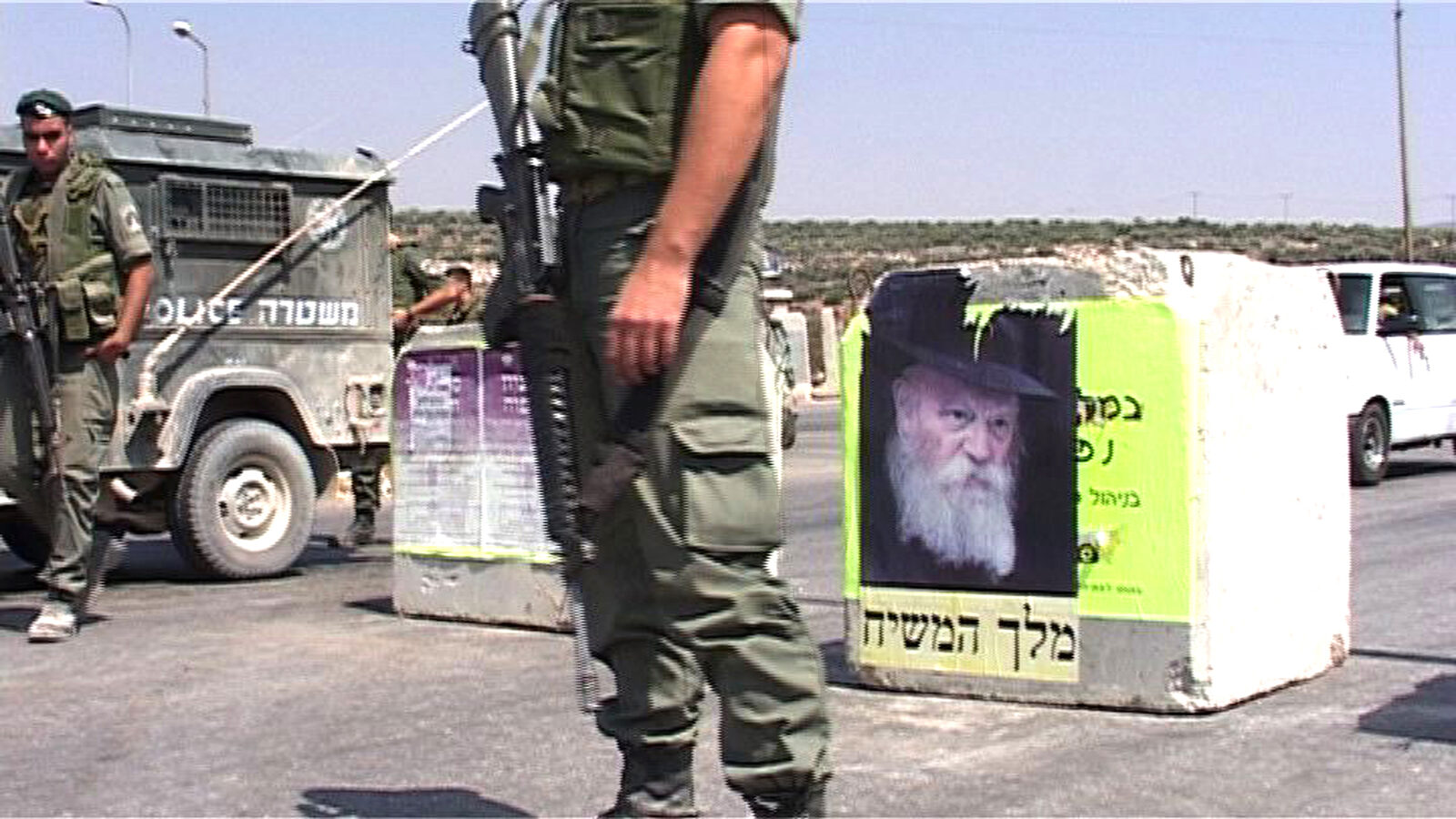
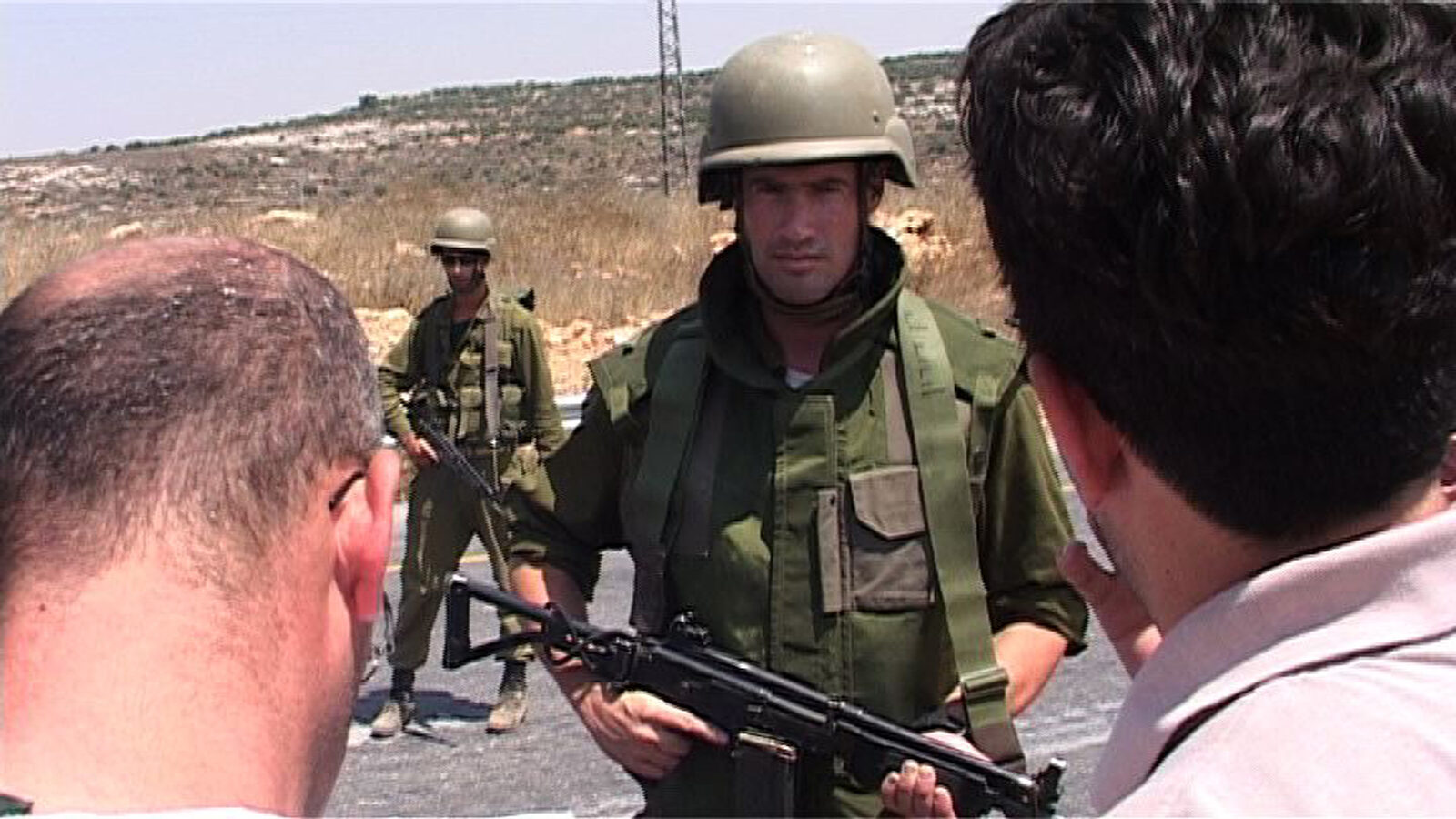
Kalandia, located between Jerusalem and Ramallah, is the most imposing of them. An occasion to discuss the virtues of politeness with the soldiers.
In a military court, an Israeli lawyer defends young Palestinian suicide bombers. The defendants' families are present. Parents are forbidden to touch the accused.
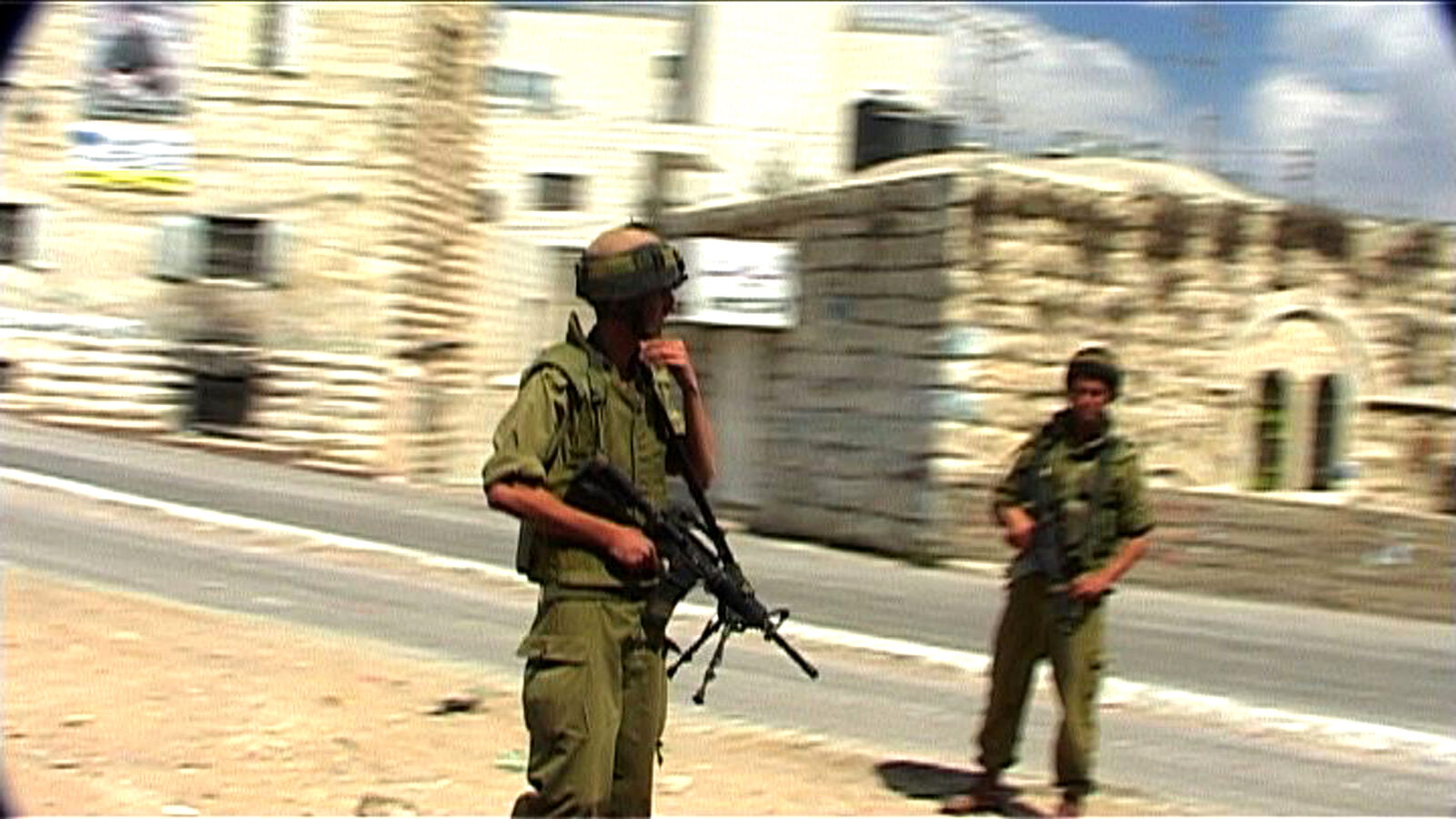
A young Israeli soldier couple together checks vehicles passing through a checkpoint. Each of them has a tongue piercing, but that's not to be mentioned.
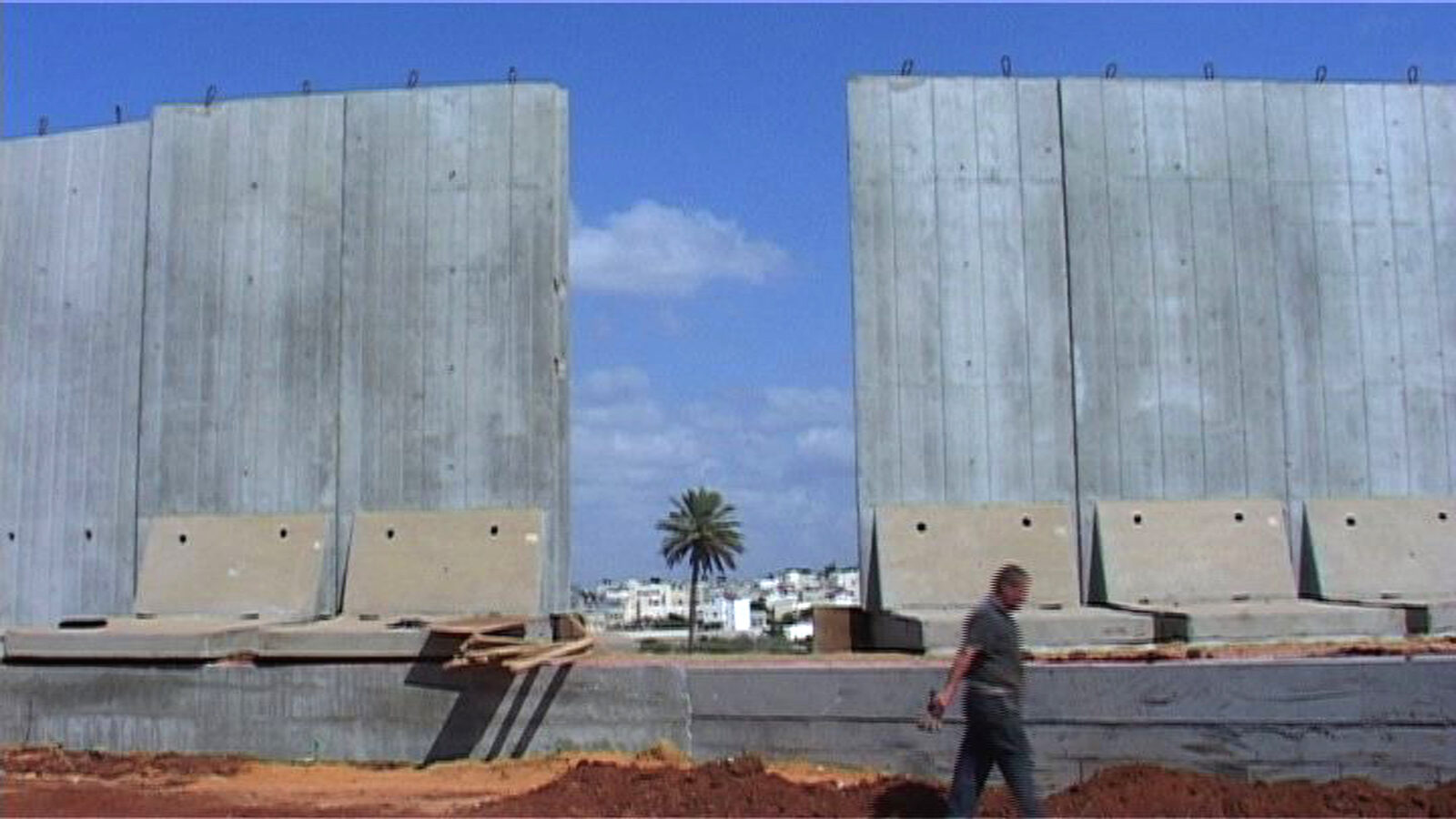
In Abu Dis, the great concrete wall cuts through the town. A Palestinian geographer explains the strategic stakes of the settlements around Jerusalem.
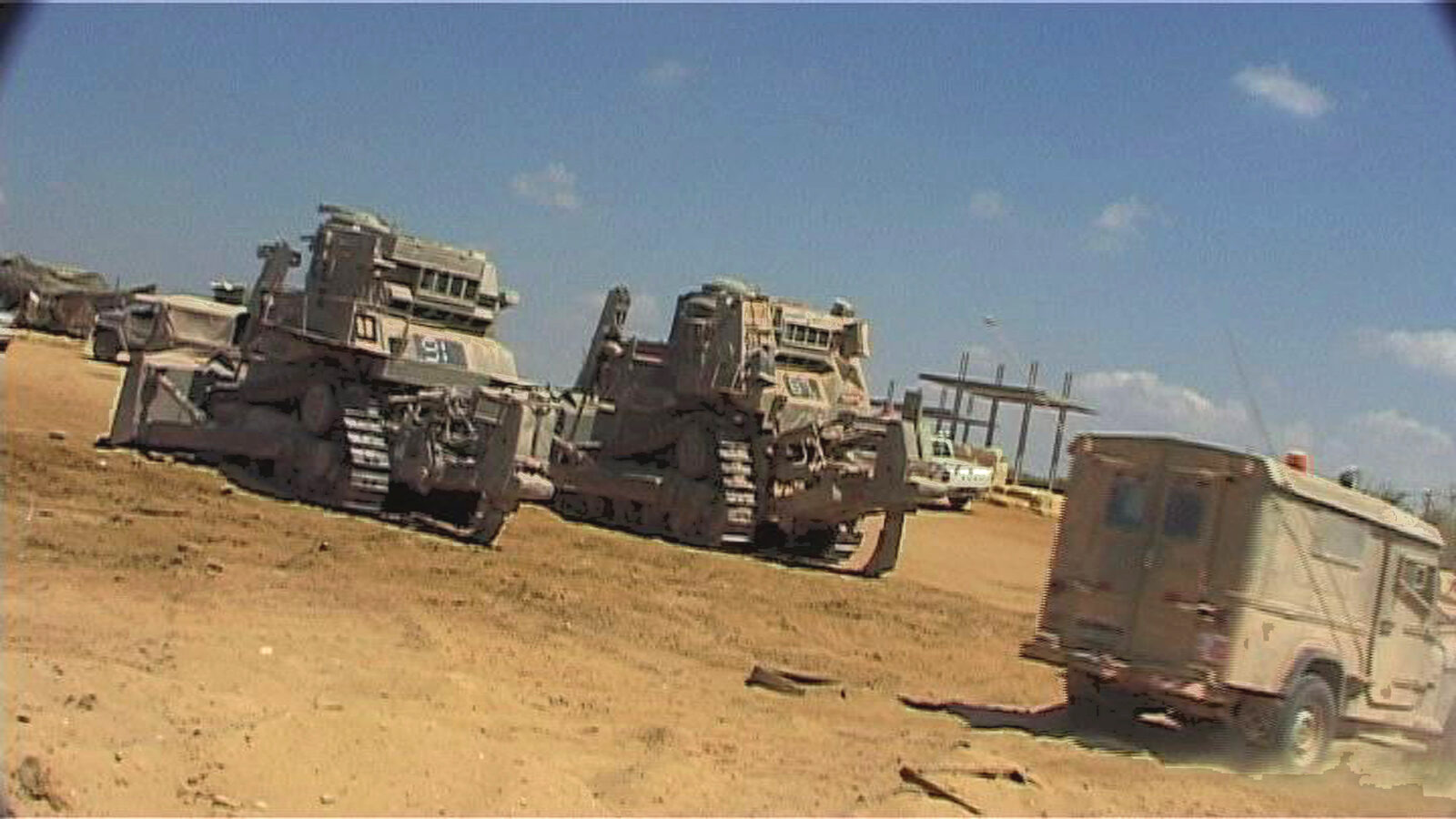
The houses of suicide bombers' families have been dynamited by the Israeli army. Families now on the street pick through the rubble.
Moments after a suicide bombing in Jerusalem, a total closure is imposed across the whole territory. At the Al-Ram checkpoint, a soldier spontaneously addresses the camera.
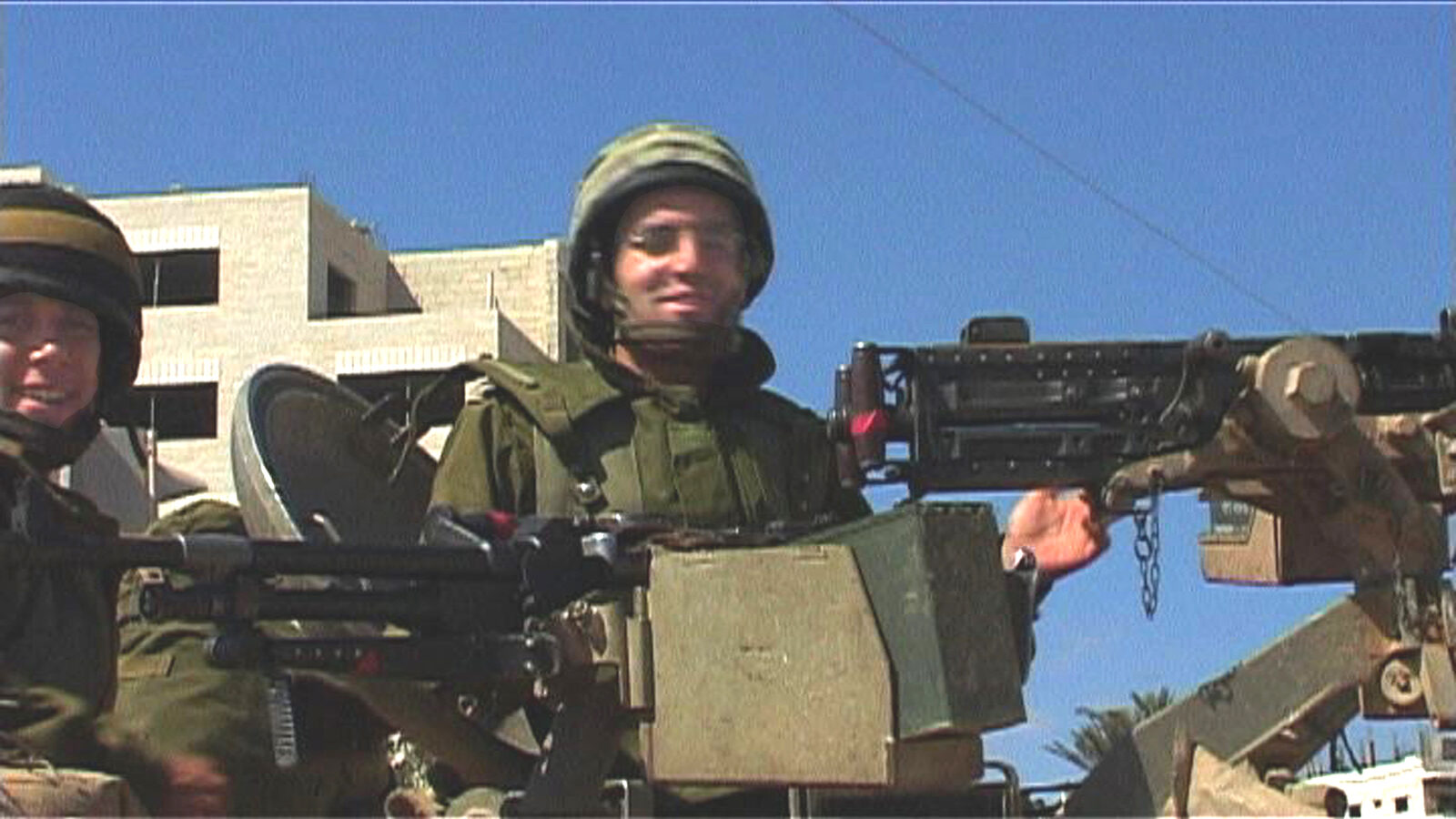
Ramallah is under curfew. The Israeli army controls every movement. From his tank, an officer talks about literature and philosophy.
The road between Bethlehem and Beit Jala is blocked. Guests of the Palestinian wedding held in Beit Jala take steep dirt paths to reach the celebration. The military occupation will not stop the party.
3. TOWARD THE NORTH: From Rosh Ha'Ayin to the Border with Lebanon
In Rosh Ha'Ayin, a Yemenite Jewish jogger does not remember that before 1948 there was an Arab village at Majdal Sadiq.
The highway heading north is brand new. It runs alongside the also brand-new separation wall.
Near Qalqilya, Palestinian workers and Israeli archaeologists work together at a small archaeological site. At the foot of the wall under construction, the workers are Arab, Turkish-Bulgarian, Uzbek.
Surrounded by military posts, the town of Qalqilya is under curfew.
In Tulkarem, a group of demonstrators from the Jewish-Arab movement Ta'ayush (Living Together) is stopped by soldiers. They want to bring supplies to the residents of the besieged Palestinian town. Access is impossible.
In Bir Zeka, during the olive harvest, inspectors from the Chief Rabbinate ensure the harvest is kosher. The landowner tells how he himself moved the border, back in 1947.
In the Jezreel Valley region, at nightfall, fighter jets return to their base at the centre of the valley. A passerby speaks of today's settlements as a continuation of yesterday's kibbutzim.
At Kibbutz Yif'at, staff at the pioneers' history museum welcome groups and re-enact for them the adventure of the first pioneers.
The town of Lubya lies in ruins today. At the site, a group of Israeli teenagers walks under the protection of an armed guard.
The director of the Sejera museum, an immigrant from Great Britain, sees his own personal path as a continuation of that of the pioneers who settled here at the start of the 20th century.
In Tur'an, a Palestinian woman, surrounded by her grandchildren, recounts her expulsion in 1948 from the village of Sejera, 4 kilometres away.
Near the war memorial at Nujeidat, Arab-Israeli schoolchildren talk about identity.
At the entrance to Kibbutz Farod, an old soldier who took part in "Operation Broom" recounts the expulsion of Arab inhabitants from northern Palestine before the war.
In the village of Kfar Shammai, an inscription on a wall reads "We had a dream. What remains is a maybe." An immigrant from Morocco recounts how she worked on the clandestine emigration of Moroccan Jews.
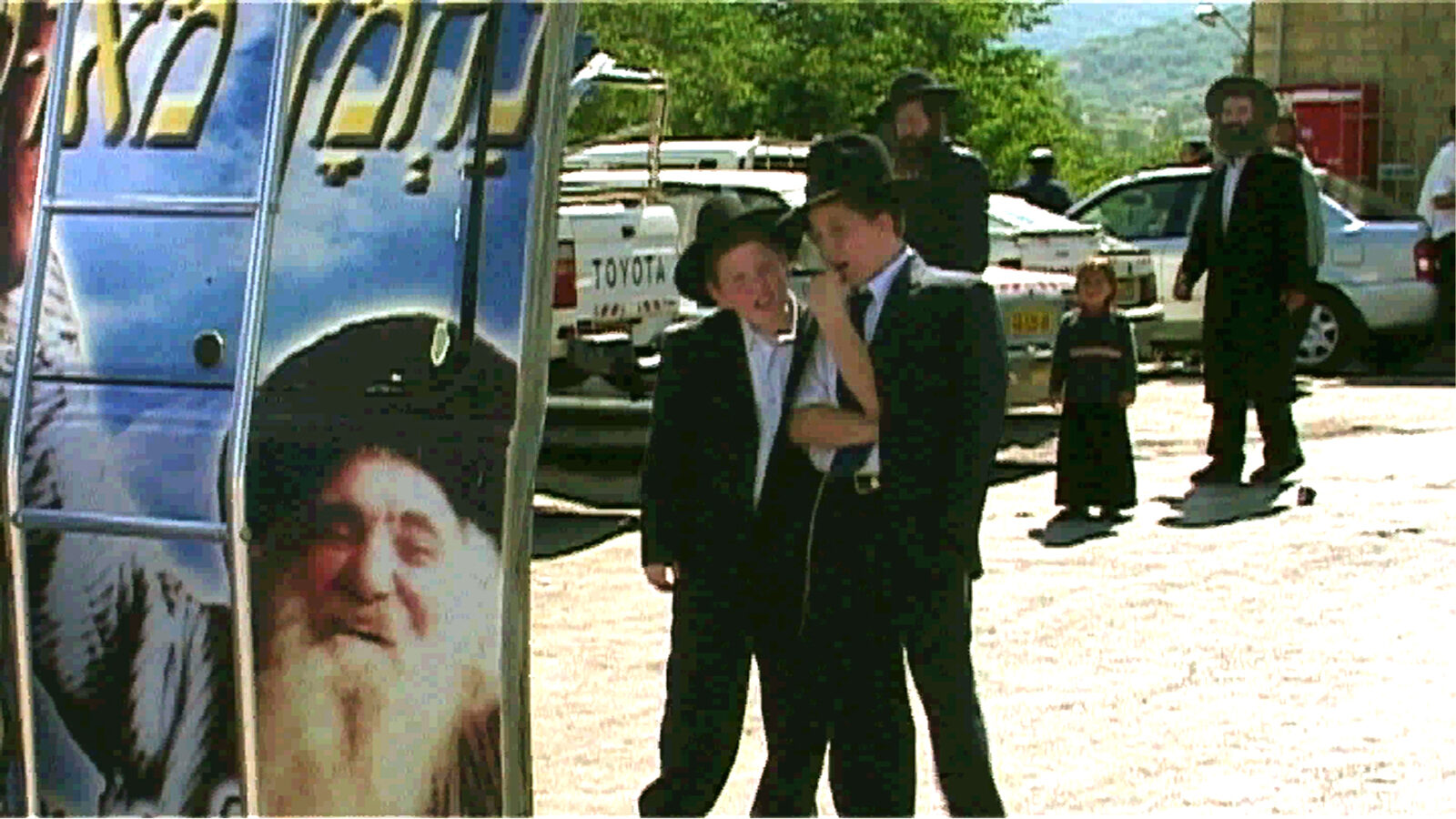
Meron is an Orthodox religious site. It is a permanent celebration. Deafening music. Joyful dancing.
In Shefer, a Moroccan Jew and his Tunisian Jewish wife live with nostalgia for their countries of origin and mourning for their son who died in the Lebanon War. They believe that Jews and Arabs can live together in peace, as they once did in the Arab world.
This great journey ends at sunset, at the border with Lebanon.